Gorilla Trekking for Beginners:
What to Expect on Your First Trek
in Uganda or Rwanda
March 5th 2026 | 4 minute Read
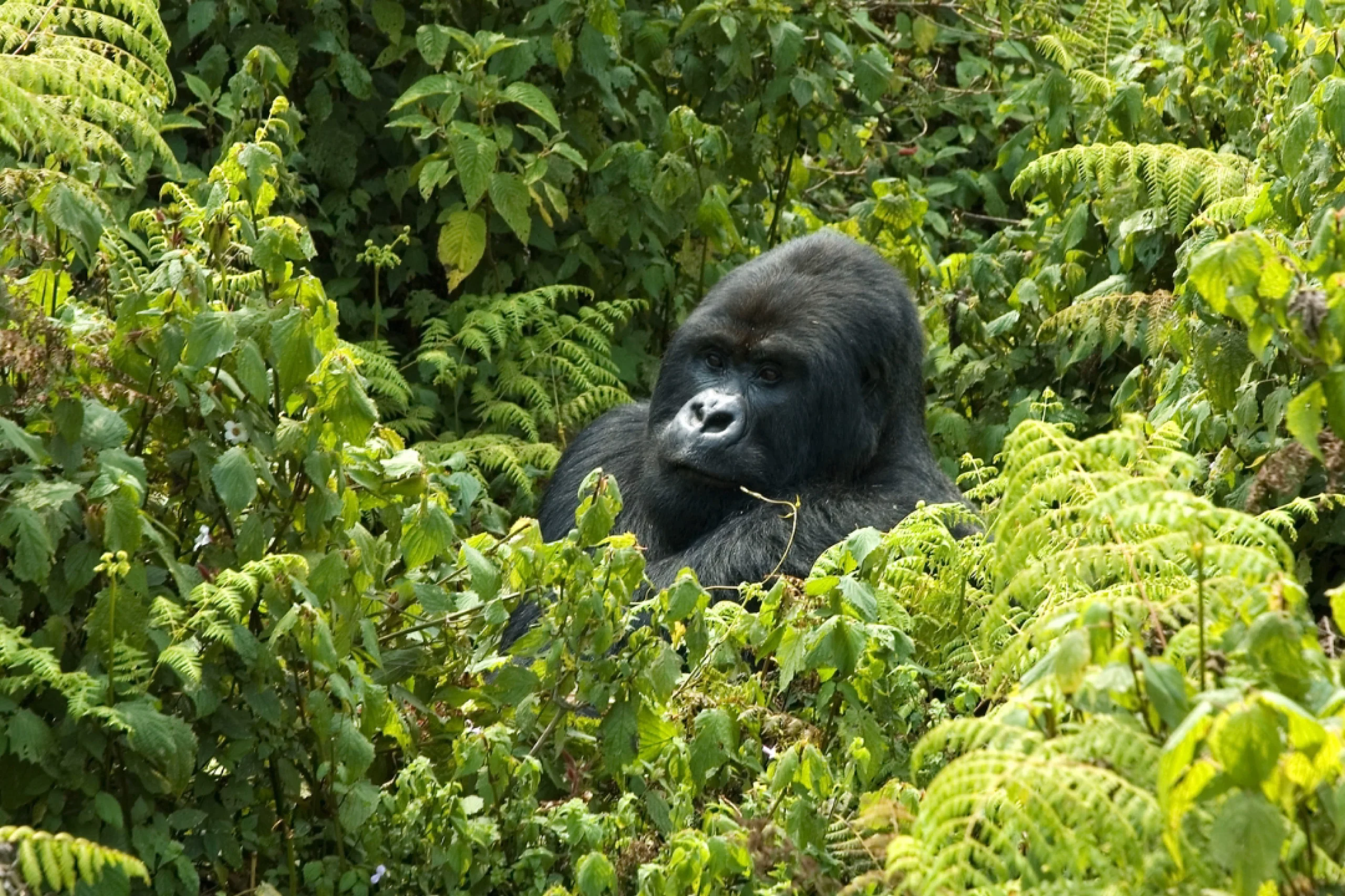
Some safari moments stay with you for years: a lion on the hunt, elephants crossing a river at sunset. But ask anyone who’s been gorilla trekking and they’ll tell you it’s a different thing altogether. Maybe it’s the build-up to the hike, or the quiet of the forest. Or maybe it’s the moment you end up a few metres from a wild silverback, watching him go about his morning while everything else fades away. It’s one of Africa’s great wildlife experiences, and also one of the most misunderstood. If you’re thinking about your first trek, here’s what’s worth knowing before you go.
1.What is gorilla trekking actually like?
Unlike a traditional safari, gorilla trekking happens on foot.
Your day begins early with a briefing from park rangers before you’re assigned to a specific gorilla family. While you’re preparing, trackers are already in the forest locating the group and monitoring their movements.
Then the adventure begins.
Some treks are surprisingly short, reaching the gorillas in under an hour. Others can take most of the day as you hike through dense forest, climb steep slopes, and follow signs left behind by the family you’re tracking.
The payoff is the same either way: time with wild mountain gorillas.
And yes, that moment is strictly limited. Whether your hike took 30 minutes or eight hours, every visitor spends exactly 60 minutes with the gorillas before returning.
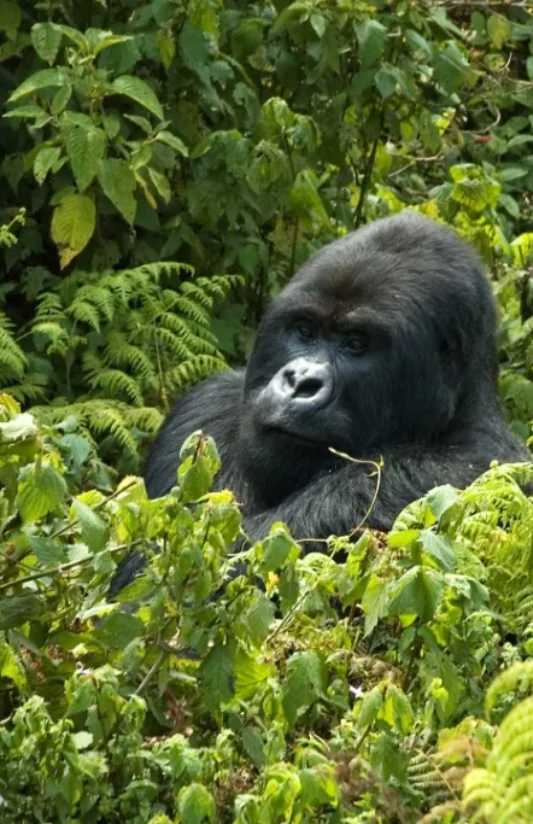
Mountain gorillas live in only a handful of places: Uganda’s Bwindi Impenetrable National Park and Mgahinga Gorilla National Park, Rwanda’s Volcanoes National Park, and the Virunga region of the Democratic Republic of Congo. Fewer than 1,100 remain in the wild.
Something else that surprises people: only eight visitors are allowed in with each gorilla family per day, so it never feels crowded.
2. Do I need to be fit?
Not as fit as most people imagine.
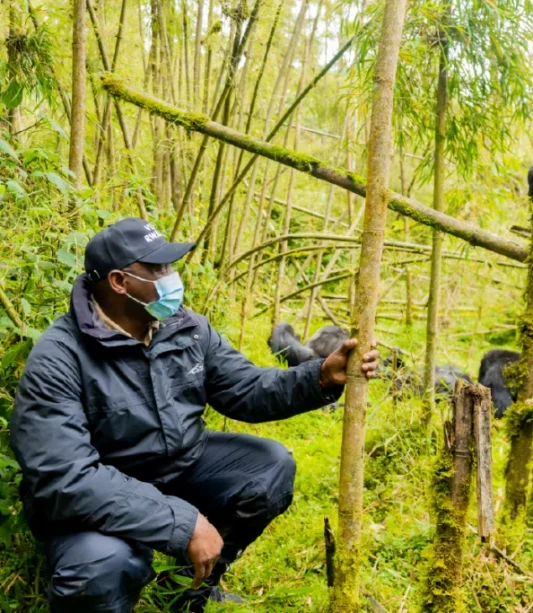
You don’t need to be a marathon runner or an experienced mountaineer, but you should be comfortable walking on uneven terrain for several hours. The trails can be muddy, steep, and occasionally slippery, particularly after rain.
For first-time trekkers, Rwanda is often considered the easier option. Treks in Volcanoes National Park frequently take place in more open bamboo forests and are often shorter, averaging between two and four hours.
Uganda’s Bwindi is wilder and more varied. Some routes are fairly gentle; others involve longer hikes through thicker vegetation and steeper ground.
The good news is that rangers assess visitors each morning and try to match groups to gorilla families based on fitness levels and hiking ability.
A few weeks of regular walking before your trip is usually enough preparation for most travellers.
3. What permits do I need?
One of the most important things to understand about gorilla trekking is that permits are essential. Without a permit, you cannot trek.
In Uganda, permits are issued by the Uganda Wildlife Authority. In Rwanda, permits are issued by the Rwanda Development Board year-round.
Because visitor numbers are tightly controlled, permits often sell out well in advance, especially during the peak travel seasons from June to September and December to February.
Most travellers secure permits through a licensed tour operator, who handles the booking process and coordinates the logistics around your chosen trekking date.
As a general rule, booking six to nine months ahead is recommended for peak season, while low-season travel can often be arranged with shorter notice.

4. What should I wear and pack?
Even during the dry season, it’s best to prepare for mud, rain, and dense vegetation.
Long trousers and long sleeves help protect against scratches and insects. Waterproof hiking boots with good ankle support are strongly recommended, as trails can become slippery with little warning.
A lightweight waterproof jacket is essential, and mornings can be surprisingly cool, particularly at higher elevations.
For your daypack, consider bringing:
• At least two litres of water, Energy snacks, Sunscreen, Insect repellent, A hat, Sunglasses, and Spare camera batteries, Gardening gloves
• Yes, gardening gloves.
They’re one of the most useful items you can carry, especially when you’re grabbing branches or thorny vegetation while climbing through the forest.
Most parks also provide walking sticks at the trailhead, which can make a significant difference on steep sections.
Photographers should remember that flash photography is not allowed. A versatile zoom lens is often more useful than a large telephoto lens, as gorillas are frequently much closer than visitors expect.
5. How close do you get to the gorillas?
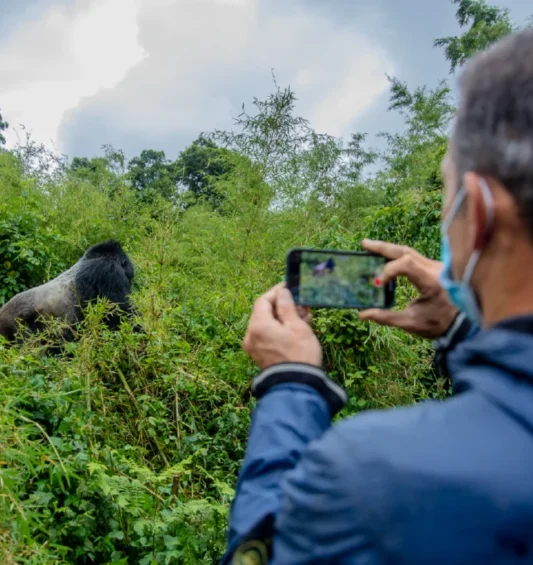
The official minimum distance is seven metres.
This rule exists to help protect gorillas from human illnesses, as they share around 98% of our DNA and are vulnerable to many of the same infections we are.
In fact, visitors showing symptoms of colds, flu, or other contagious illnesses may be denied permission to trek on the day.
Of course, gorillas don’t always follow the rules.
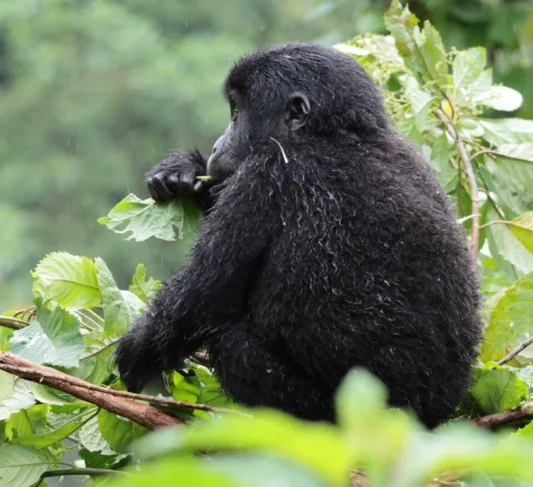
Young gorillas are famously curious and occasionally wander closer than expected. If that happens, the best thing to do is remain calm, stay still, and follow your ranger’s instructions.
Touching a gorilla is never permitted, even if one comes within arm’s reach.
6. Is gorilla trekking worth it?
Ask almost anyone who’s done it and you’ll hear the same answer.
Absolutely.
The hike can be challenging. You’ll probably get muddy at some point.
But none of that tends to matter when you’re standing in the middle of a rainforest watching a gorilla family interact naturally.
It’s a wildlife encounter unlike any other, and for a lot of people it’s the thing they remember most from East Africa.