Best safari destinations in East Africa: an
honest guide to where to go
March 5th 2026 | 4 minute Read
Planning a safari?
East Africa is spoiled for safari. That’s the lovely problem. Mara, Serengeti, Ngorongoro, Amboseli with Kilimanjaro behind it, Samburu out in the dry north. Every one of them is brilliant, which is exactly why first-timers freeze up trying to pick. People email us asking “where’s the best safari in East Africa?” and the truthful answer is: it depends what you want from it.
So instead of crowning one winner, here’s how the great destinations actually differ, and how we help families and couples choose between them.
1. Where should a first-time safari-goer actually go?
If it’s your first safari, you want high odds of great sightings, easy logistics, and somewhere that feels like the safari in your head. For most people that means Kenya’s Masai Mara, Tanzania’s Serengeti and Ngorongoro Crater, or a mix of the two countries.
Kenya is the gentler entry point. Flights land in Nairobi, the tourism setup is well oiled, and from the capital you can be in the Mara on a 45-minute light aircraft hop. The Mara rewards you quickly too, with some of the densest big-cat populations anywhere, so a first-timer rarely goes home without lions.
Tanzania trades a little convenience for sheer scale and drama. The Serengeti’s plains seem to run forever, and the Ngorongoro Crater is the closest thing to a guaranteed Big Five day in East Africa. Plenty of first-timers want the region’s greatest hits in one go, and a combined Kenya and Tanzania trip delivers exactly that, with Lake Nakuru’s rhinos or a few beach days in Zanzibar tacked on the end.
2. Masai Mara or Serengeti: which one wins?
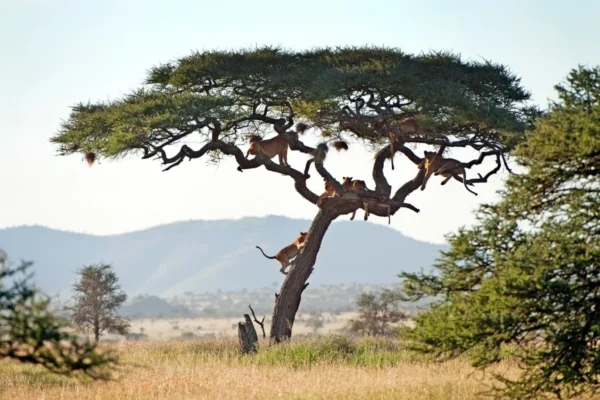
This is the question we get more than any other, and the honest answer is that they’re two halves of the same ecosystem. The border between them is unfenced, the wildlife wanders across it, and the wildebeest treat the whole thing as one enormous lawn.
The difference is mostly size and feel. The Serengeti is huge, around 14,750 square kilometres, while the Mara is compact at roughly 1,500. That size gap explains almost everything. The Mara’s smaller footprint concentrates the animals, so sightings come fast and big cats are everywhere. The Serengeti feels wilder and emptier, with horizons that don’t end, but you sometimes drive longer between encounters. Neither is better. They’re different moods.
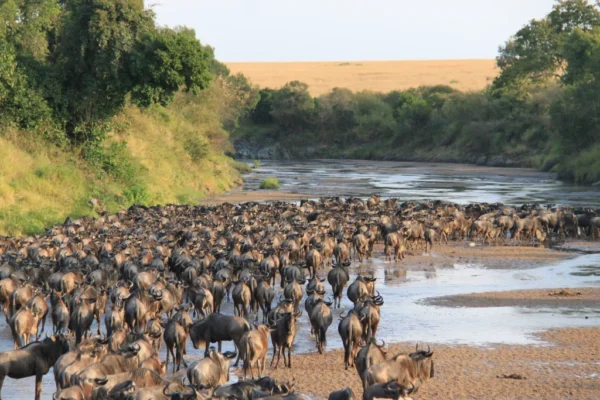
Timing is the real decider, because the migration spends different months in each. Roughly January to July or August it’s in the Serengeti (including the dramatic calving season on the southern plains), and August to October it crosses into the Mara for the famous river crossings. Tell us when you can travel and the herds basically choose your park for you.
Two practical notes. The Mara is easier and usually cheaper to reach from Nairobi, with more lodges just outside the reserve at friendlier prices. The Serengeti involves a bit more travel but pays you back in space and that end-of-the-earth feeling.
3. Where do you get the best Big Five sightings year-round?
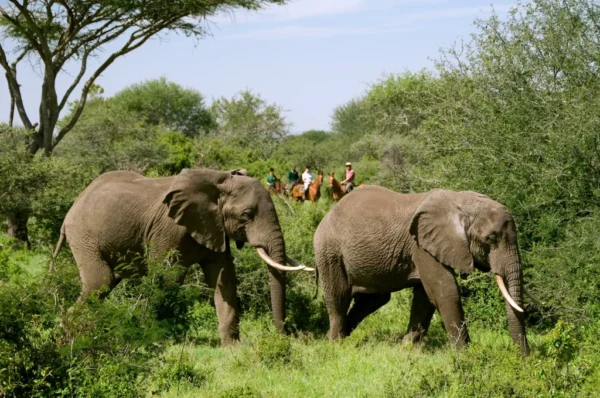
If your heart is set on seeing all five (lion, leopard, elephant, buffalo, and the tricky one, rhino) without gambling on the seasons, the Ngorongoro Crater is the standout. It’s one of the only places on earth where you can realistically see all five in a single day.
The reason is simple: the crater is a collapsed volcano with steep walls, and most of its animals just stay put rather than migrating in and out. There’s a resident population of endangered black rhino on the crater floor, which is the sighting everyone crosses their fingers for, plus easy lions, frequent elephants (often big old bulls), and buffalo in numbers. Leopards are the shy ones, as always, but the crater gives you a better shot than most. Because the wildlife is resident, it delivers all year, with the June to October dry season making animals even easier to spot around the waterholes.
In Kenya, Lake Nakuru is the rhino equivalent, with both black and white rhino plus Rothschild’s giraffe in a compact, easy park. Pair it with the Mara and you’ve covered the Big Five comfortably.

4. Which destinations give you the most safari for your money?
Great wildlife does not have to mean a five-figure trip. Some of East Africa’s best value sits slightly off the headline circuit.
Lake Nakuru is a brilliant budget-friendly stop: small, close to Nairobi, loaded with rhino and flamingos, and easy to combine with the Mara or Amboseli on a short loop. Tsavo, Kenya’s largest park, is often quieter and cheaper than the Mara while still serving a proper Big Five experience across dramatic, red-earth country. As a rough yardstick, a well-run budget Kenya safari tends to run somewhere around 150 to 300 US dollars per person per day, and the classic multi-park loops (Mara, Amboseli, Nakuru, sometimes Samburu and Tsavo) pack a lot of variety into one trip.
Our take: value isn’t only about the nightly rate. Choosing the conservancies and timing well, and skipping the busiest dates, often gets you a better trip for less. That’s the bit we obsess over on your behalf.
5. Amboseli, Tsavo, or Samburu: how do you choose?
These three are how you give a Kenya trip its personality beyond the Mara. Each has a clear character.
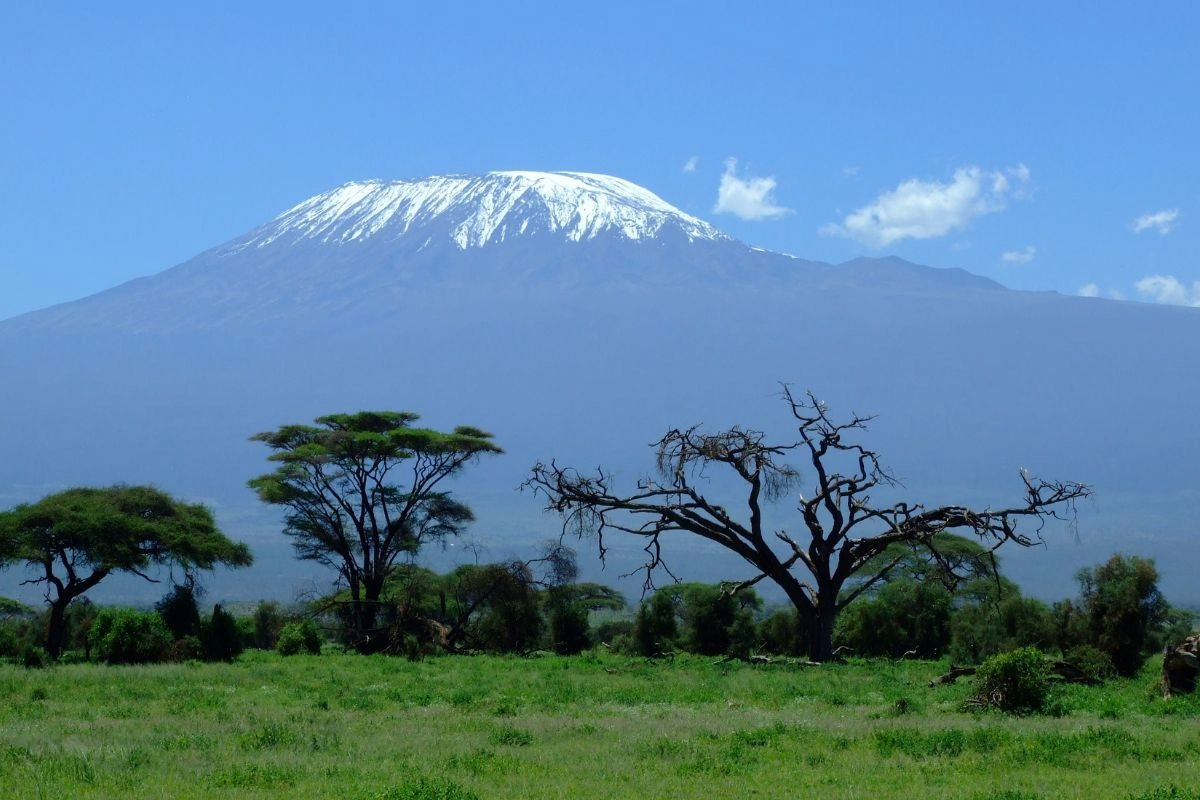
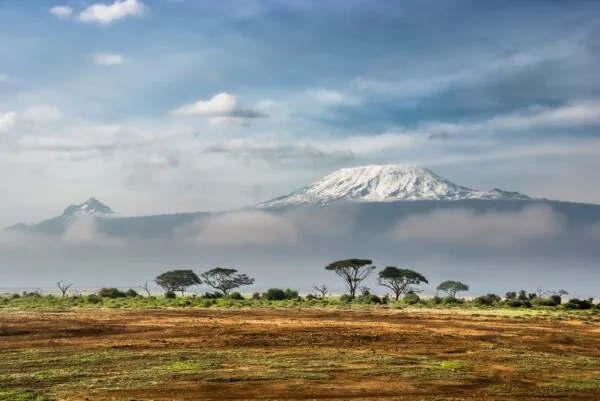
Amboseli is the postcard. Mount Kilimanjaro looms over the plains, and the park has more elephants than anywhere else in Kenya, including enormous tuskers and the famous dust-red herds. It’s compact, so two or three days covers it, and it’s hard to beat for first-timers who want that iconic photo of elephants with a snow-capped peak behind them.
Tsavo (East and West combined) is Kenya’s biggest wilderness, over 22,000 square kilometres of lava fields, springs, and red-dusted elephants. It’s wilder, quieter, and more affordable, and Tsavo West in particular is genuinely scenic. Good for travellers who want a classic Big Five safari without the crowds.
Samburu, up in the arid north, is the connoisseur’s pick. It has its own cast of species you won’t see in the Mara or Amboseli, the so-called Samburu Special Five: Grevy’s zebra, reticulated giraffe, Beisa oryx, Somali ostrich, and the wonderfully odd gerenuk. It’s smaller, less crowded, and a favourite of repeat visitors and photographers.
Quick rule of thumb: Amboseli for the Kilimanjaro scenery and elephants, Tsavo for space and value, Samburu for rare species and exclusivity. Many of our guests pair one of these with the Mara so a single trip swings from big-cat drama to something rarer and quieter.
So where do you start?
There isn’t one best safari destination in East Africa. There’s the best one for your dates, your budget, and the kind of days you want to have. First timer chasing the classics? Mara plus Ngorongoro is hard to beat. Determined to tick off the Big Five? Build around the crater and Nakuru. Watching the budget? Nakuru and Tsavo punch well above their weight. Been before and want something rarer? Samburu.
At Holiday Bazaar we plan all of these by hand, and through our Wild Whispers partnership we can stitch parks together with private guides, light-aircraft transfers, balloon rides over the Mara, and a Zanzibar or Diani beach finish when you’ve earned it. Tell us when you want to travel and what you’re hoping to see, and we’ll point you to the right corner of East Africa.