Luxury Family Safari Planning: Kenya & Tanzania Guide
June 3rd 2026 | 3 minute Read
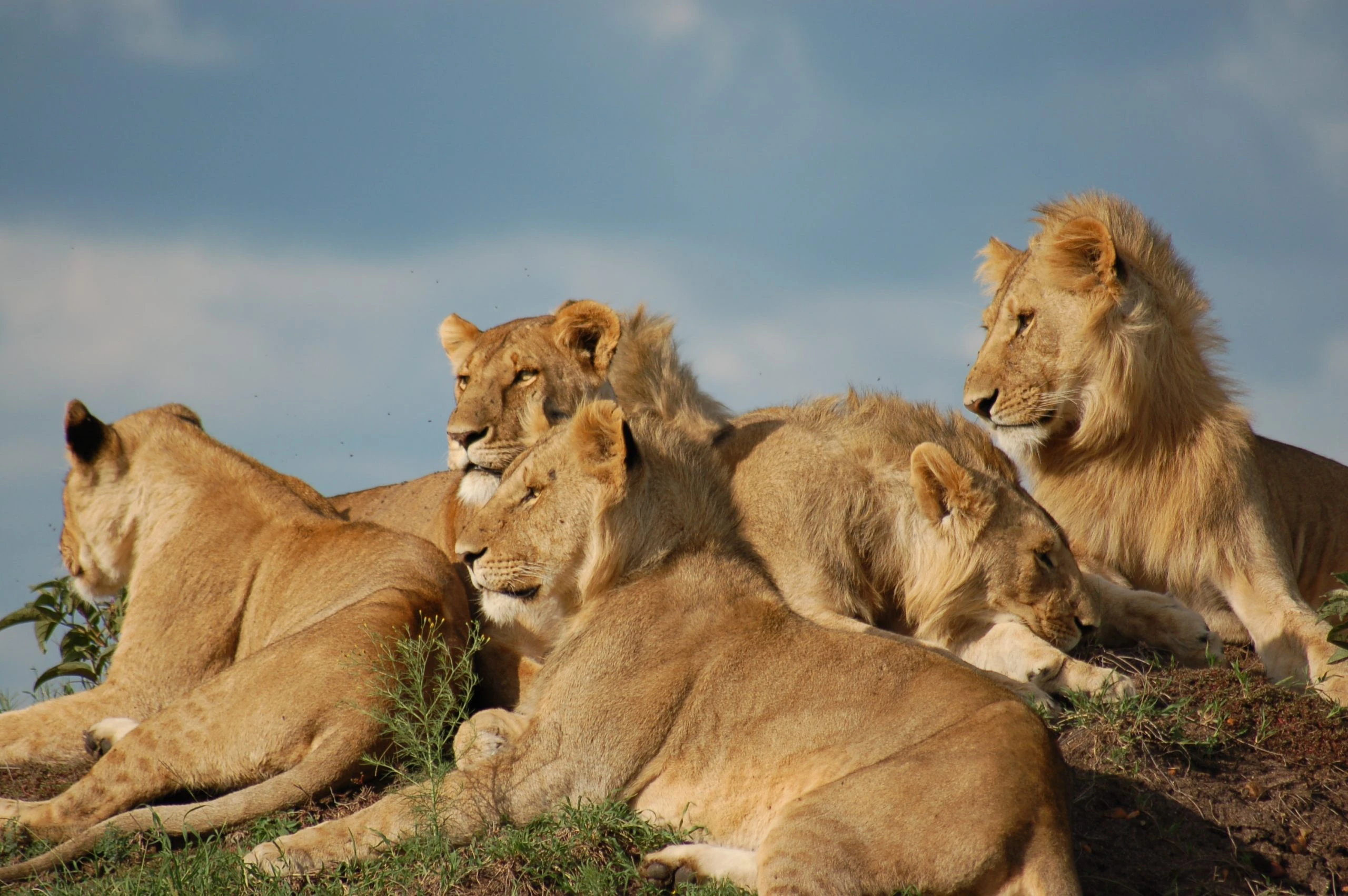
There’s a particular moment that happens on every good family safari. The kids have been quiet for a while, faces pressed to the edge of the vehicle, and then a lion yawns about ten metres away and everyone forgets to breathe. No screen has ever done that. No theme park comes close.
A family safari is one of the few holidays that genuinely thrills a six-year-old and a sixty-year-old at the same time. The trick is in the planning. Get it right and you get the trip your family talks about for the next twenty years. Get it wrong and you get tired toddlers, a four-hour game drive nobody asked for, and a lodge that politely informs you children aren’t allowed in the main lounge after six.
We plan these trips for a living, so here are the questions we get asked most, answered properly.
1. Which luxury lodges and camps actually work for families?
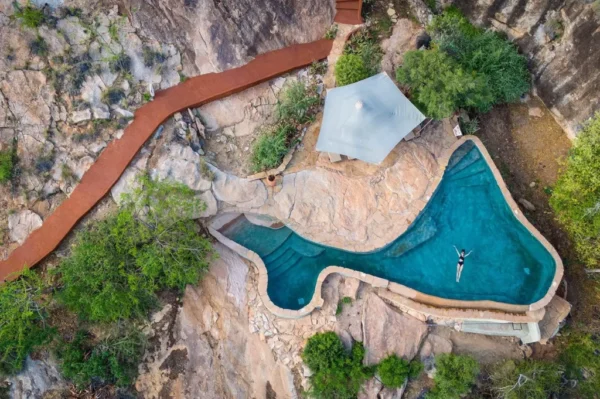
Plenty of camps say they welcome families. Far fewer are built for them. The good ones have interconnecting tents or family suites, a pool for the in-between hours, fencing or enclosed decks so you’re not white-knuckling every time a child wanders, and guides who genuinely like having young people in the vehicle. That last one matters more than the thread count.
A few of our favourites across Kenya and Tanzania:
In Kenya, Sanctuary Olonana on the banks of the Mara River has family suites with private plunge pools and a Young Explorers programme built around bush treasure hunts and time with Maasai hosts. andBeyond Kichwa Tembo runs a WILD child programme for ages three to twelve, with the kind of activities (bug hunts, bark rubbing, baking) that keep small humans busy between drives. Saruni Samburu has family villas and a Warriors Academy where children learn to track and throw a spear under supervision, which is roughly the coolest thing a nine-year-old can imagine. And no list is complete without Giraffe Manor in Nairobi, where breakfast comes with Rothschild’s giraffes poking their heads through the windows. It’s as magic as the photos suggest.
Cross into Tanzania and the Four Seasons Safari Lodge Serengeti is hard to beat for families, with its Kids for All Seasons club and a teen-focused Kijana Klub, plus a pool overlooking a waterhole that animals actually visit. Mkombe’s House Lamai in the northern Serengeti is an exclusive-use home designed with young children in mind, so you get the whole place to yourselves, interconnecting rooms, a kids’ plunge pool, and guides who know how to entertain. For something gentler, Gibb’s Farm near the Ngorongoro Crater is a working coffee plantation where kids can help on the farm, paint, and swim between the bigger adventures.
We match the property to your children’s ages rather than the other way round. A camp that’s perfect for teenagers can be the wrong call for a four-year-old, and vice versa.
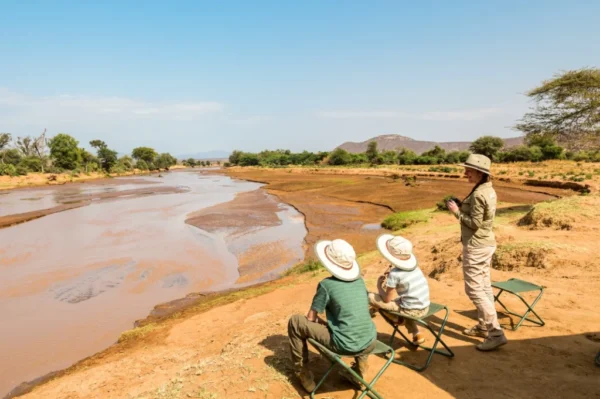
2. How do you plan a safari that’s safe and fun for young kids?
Start with age. There’s no national rule, but most classic tented camps in the Mara won’t take children under five, and many set the minimum at six for shared game drives. The sweet spot for a first safari tends to be eight to twelve, when kids are alert, hardy, and old enough to remember it. Younger than that and a private vehicle is usually the answer, so the pace bends to your family rather than a stranger’s.
The single best thing you can do for safety is brief your children before you arrive. Stay seated in the vehicle, no standing, no arms out, keep voices down near animals. Kids handle this brilliantly when they know it’s coming and far less brilliantly when it’s sprung on them mid-drive.
Two health points we never let slide. First, the parks are malaria areas, so talk to your doctor or a travel clinic well ahead about the right antimalarial for your children. Paediatric doses differ from adult ones, and this is not a week-before job. Second, kids burn fast in an open vehicle. SPF50, long sleeves, a proper hat, and reapplication every couple of hours.
Then there’s pacing, which quietly makes or breaks the week. Don’t try to match the serious photographers doing dawn-to-dusk drives. A rhythm that works: out by six, back by ten for breakfast and a rest, something gentle late morning like a guided walk or a kids’ activity, and back in the vehicle around four when the light and the animals both improve. That’s a day a seven-year-old and a grandparent can both enjoy. A pool helps enormously, by the way. It turns the dead hours into the part the kids ask for.
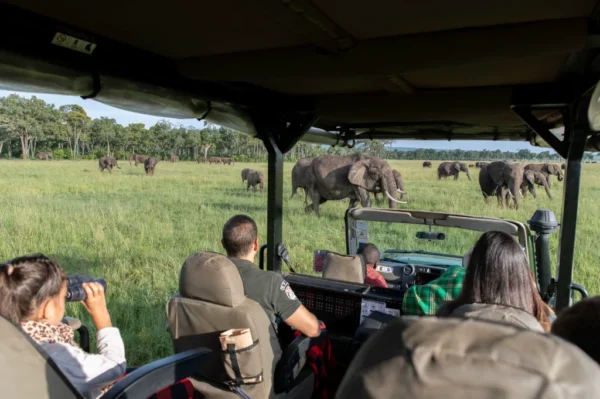
3. What should you pack?
Less than you think. Almost every good lodge does same-day laundry, so you can travel light and re-wear happily.
Clothes first. Neutral colours (khaki, olive, beige) for the bush, long sleeves and trousers for sun and insects, and a fleece or soft layer for genuinely cold early mornings. Skip white and bright colours, skip camouflage (illegal to wear in some areas anyway), and in East Africa steer clear of dark blue and black, which attract tsetse flies. A wide-brimmed hat and comfortable closed shoes round it out.
For the kids specifically, give each child their own small backpack. A child who’s in charge of their own binoculars, notebook, snacks, and a card game feels like a proper explorer rather than a passenger. A cheap kids’ camera is worth its weight in gold, because looking through a lens is the fastest way to get a restless child to actually focus on what’s out there. Pack a ball or a frisbee for downtime at camp. If you have toddlers, bring your own wipes, nappies, and any specific medicines, since they aren’t always easy to find locally.
The non-negotiables for everyone: high-SPF sunscreen, strong insect repellent, a small first-aid kit, personal medications, and a decent pair of binoculars each. Soft-sided duffel bags, not hard suitcases, because light aircraft between camps have strict, awkward luggage rules. We’ll send you a full packing list tailored to your route and your children’s ages once your trip is booked.
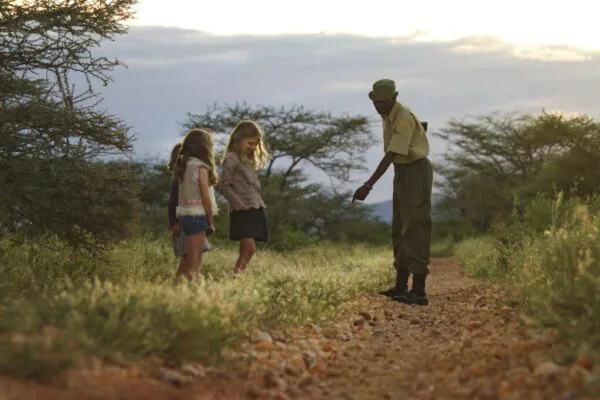
4. Which camps run real children’s programmes?
If you want the kids genuinely occupied (and you), look for properties with structured, named programmes rather than a vague promise to keep them entertained.
The standouts at the moment: andBeyond’s WILD child across its camps, Sanctuary Olonana’s Young Explorers, the Warriors Academy at Saruni Samburu, Four Seasons Serengeti’s Kids for All Seasons and Kijana Klub for teens, and the Lemala Cubs programme at Lemala’s mobile camps, which teaches animal identification and basic tracking. These aren’t babysitting clubs bolted on as an afterthought. The best of them turn your children into junior naturalists, which is exactly what you’re hoping for.
One honest note: programmes and minimum ages change by season and sometimes year to year. We confirm the current details with every property before we recommend it, so you’re never relying on a brochure that’s twelve months out of date.
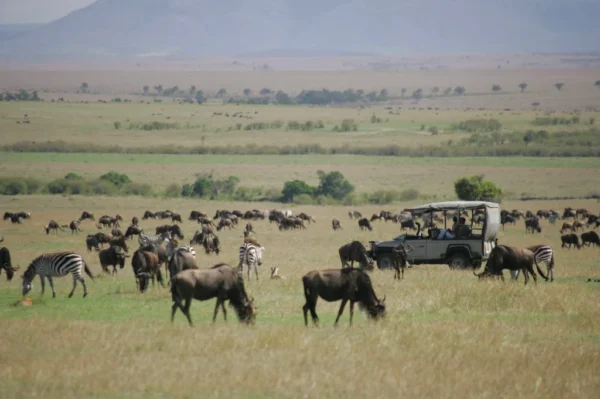
5. How far ahead should you book for peak season?
Earlier than feels reasonable. The best family rooms are the scarcest rooms, because there are only so many interconnecting tents and family suites in any camp, and they go first.
For the Great Migration in the Masai Mara (roughly July to October), we’d say nine to twelve months ahead at a minimum, and twelve to eighteen months for the truly sought-after camps near the river crossings. Demand during the migration is intense, rates can run well above the standard published price, and the properties everyone wants sell out long before the wildebeest show up. School holidays add another layer, since that’s when most families can travel, which means you’re competing with every other family for the same dates.
If your timing is fixed by the school calendar, treat early booking as the price of getting the camps you actually want. Booking eighteen months out isn’t us being dramatic. It’s us getting you the river-view family tent instead of an apology.
Let’s plan yours, get in touch.
A family safari is a big trip, and the difference between a good one and an unforgettable one is almost always in the details: the right camp for your kids’ ages, a pace that suits everyone, and a guide who lights up when a child asks a hundred questions. That’s the part we love.
At Holiday Bazaar, we build these journeys by hand, and through our Wild Whispers partnership we can arrange the extras that make a family trip sing, from private guides and bush breakfasts to balloon rides over the Mara and a few days on a Zanzibar beach when the kids have earned some pool time. Tell us your dates, your children’s ages, and what you’re hoping for, and we’ll take it from there.