Experience
Elephant Conservation in Samburu
Northern Kenya, where elephants have been followed by name for decades and orphaned calves are raised by the communities who share the land with them. Long days, dry country, and a slower kind of game viewing.
The country north of Mount Kenya is dry, red and open, and everything that lives in it is arranged around one river. Doum palms mark the water from a long way off. The elephants come down through the scrub in the late afternoon, cross where they have always crossed, and drink with the herd stood in a loose ring around the calves.
Elephants here have been watched for decades, longer than almost anywhere in Africa, and the research has been detailed enough to follow families and individuals across generations. It changes how the day feels. The guide names the matriarch before you have found her in the binoculars, and tells you which of the young bulls left the family last year and where he has been since.
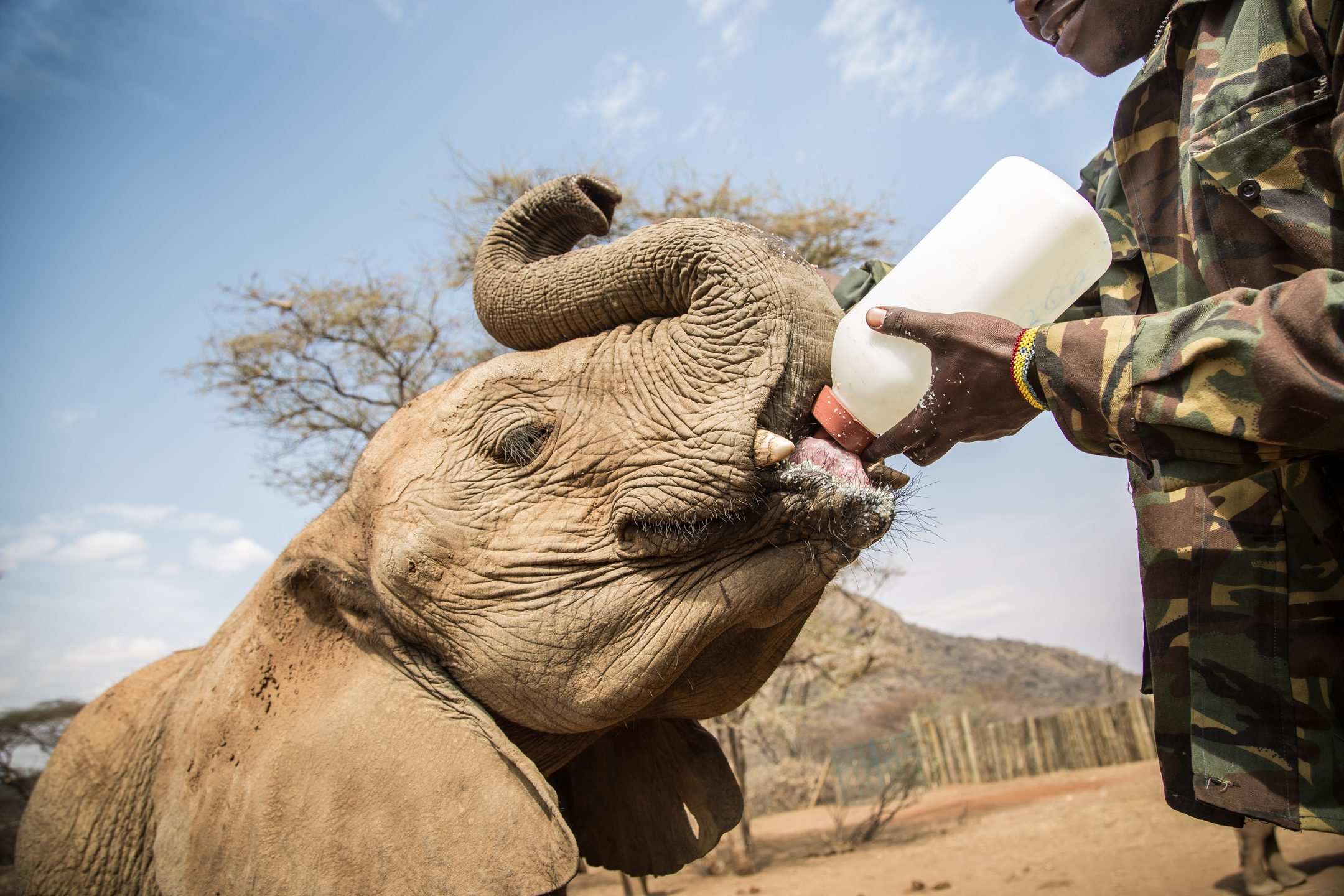
The wider ecosystem is community land as much as reserve. Conservancies run by the people who live here manage grazing, employ the scouts, and have taken on the work of raising orphaned calves until they can be returned to a wild herd. That work is not a visitor attraction by design, and access to it varies.
What we can and cannot arrange
Several institutions do conservation work in this ecosystem, and each sets its own terms for visitors: hours, numbers, a booked slot, a donation, or nothing at all in a difficult week. We do not claim standing access to any of them, and we would rather ask on your dates and tell you the answer than sell you a visit that turns out to be closed.
What we can arrange is where you stay, who guides you, and enough time in the north that the good afternoons are not a matter of luck.
Good to know
- Reserve and conservancy fees are set locally and change. We confirm the current figures in writing when we book.
- Visits to research or orphan-elephant facilities are arranged case by case and carry their own minimum ages.
- It is hot. Drives run early and late, and the middle of the day belongs to shade.
- Two nights is thin and three is better, because the river gives up its best hours to people who are still there on the third afternoon.
Which research and orphan-elephant institutions in the Samburu ecosystem accept visitors, on what terms, at what cost and with what minimum age, plus reserve and conservancy entry fees and the current state of the road and airstrip access, are all set by those bodies and by the county. We confirm what applies to your dates in writing before you pay anything.
The guide names the matriarch before you have found her in the binoculars.
Where to do it
Where we arrange elephant conservation in samburu
Start from the destination, and we will build the days around this.
Or browse every itinerary andthe rest of the experiences.
Questions we are actually asked
Can we visit an elephant research project or an orphanage?
What is the elephant viewing actually like?
What else is up there?
Is it worth the journey from Nairobi?
Can children come?
Keep reading
Where to go next
Each of these answers one of the questions this page opens.
Ask us about elephant conservation in samburu
Dates and how many of you is enough to start. We reply within one working day.
Thank you, it’s with us.
A travel designer will reply within one working day, usually sooner. Prefer to talk now? WhatsApp us on +254 722 354 333.
Your reference is . Quote it if you write again.
Plan your elephant conservation in samburu
One WhatsApp thread and one travel designer on it, start to finish.