On this page
The months we send most people on safari are January and February, and July to October. These are Kenya’s two dry seasons. The grass is short, the animals stay close to water and the tracks are firm. July to October is also when the wildebeest herds are in the Maasai Mara, which makes it the busiest and most expensive part of the year.
The rest of the year is not closed. The rainy months are cheaper, greener and quieter, and for some trips they are the better choice. This guide goes through what each season changes, and then which month to pick for what you want from the trip.
Kenya’s four seasons: two rains, two dry spells
Kenya sits on the equator, so the year turns on rain rather than temperature. The Kenya Meteorological Department describes two rainy seasons. The long rains fall from about March to May. The short rains fall from about October to December, heaviest in November. Between them come two dry spells: January to February, and June or July through to October.
Rain in Kenya mostly arrives as a heavy storm in the afternoon or evening, and the next morning is often clear. What the rain changes is the ground. The grass grows tall, water lies everywhere, so the animals spread out and are harder to find, and some tracks turn to deep mud. None of the seasons starts on a fixed date. The rains come early some years and late in others, which is why we talk about months rather than dates.
The highlands, including Nairobi, the Mara and Laikipia, are cool at night for much of the year. June to August are the coldest months, and a game drive at six in the morning then needs a proper warm layer.
The dry seasons: January to February and July to October
January and February are hot, dry and clear. The short rains have finished, the plains are still green in places, and the game gathers again at rivers and waterholes. Many camps come off their festive rates in early January. February is often the month we suggest to people who want dry-season game viewing without the peak-season crowds.
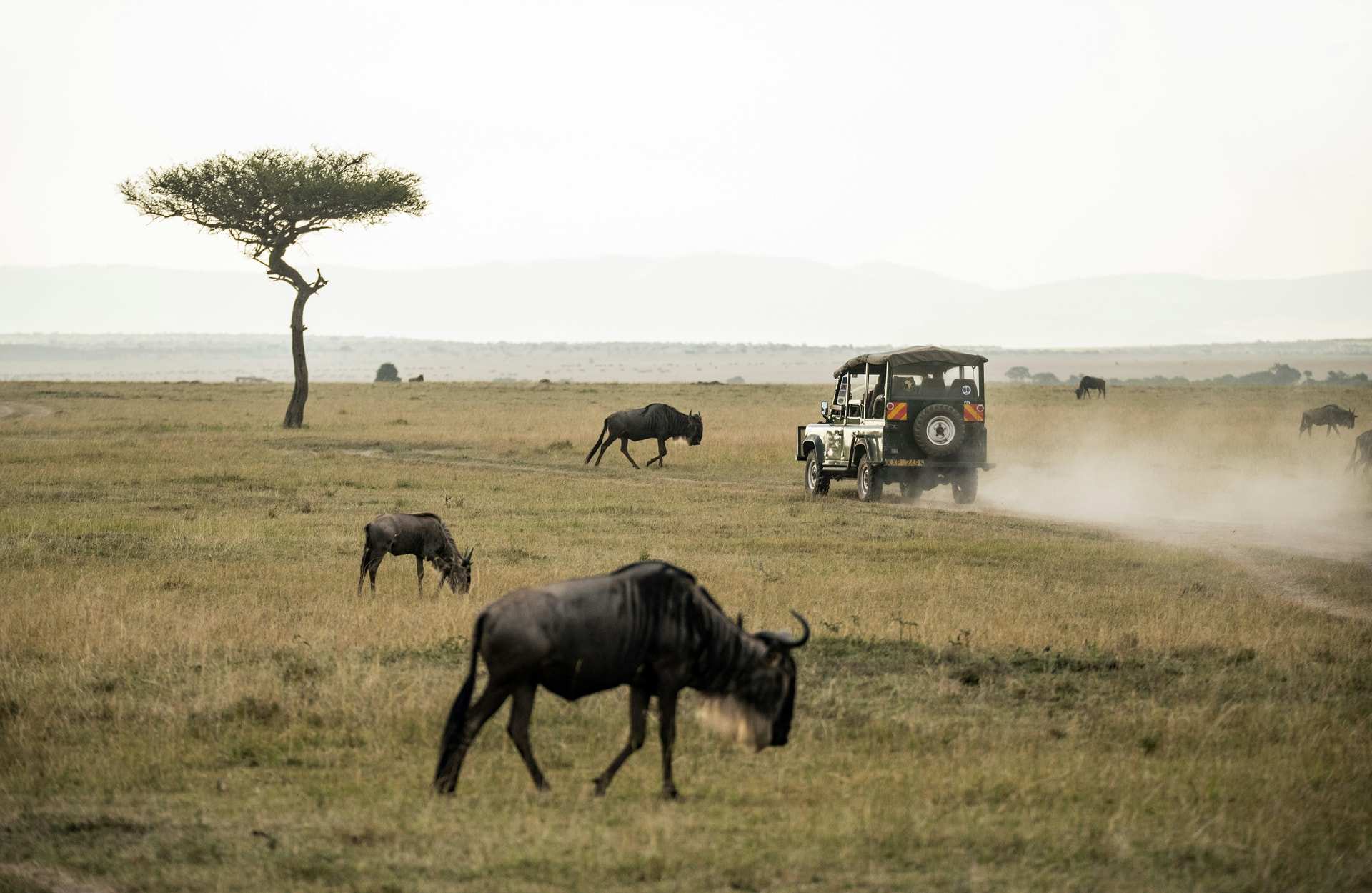
July to October is the long dry season and the peak of the year. The grass falls back, the herds arrive in the Mara, and the light is good for photography. It is the most expensive stretch, and the best-known camps in the Mara book up months ahead. By late October the short rains may be starting.
When the migration reaches the Mara
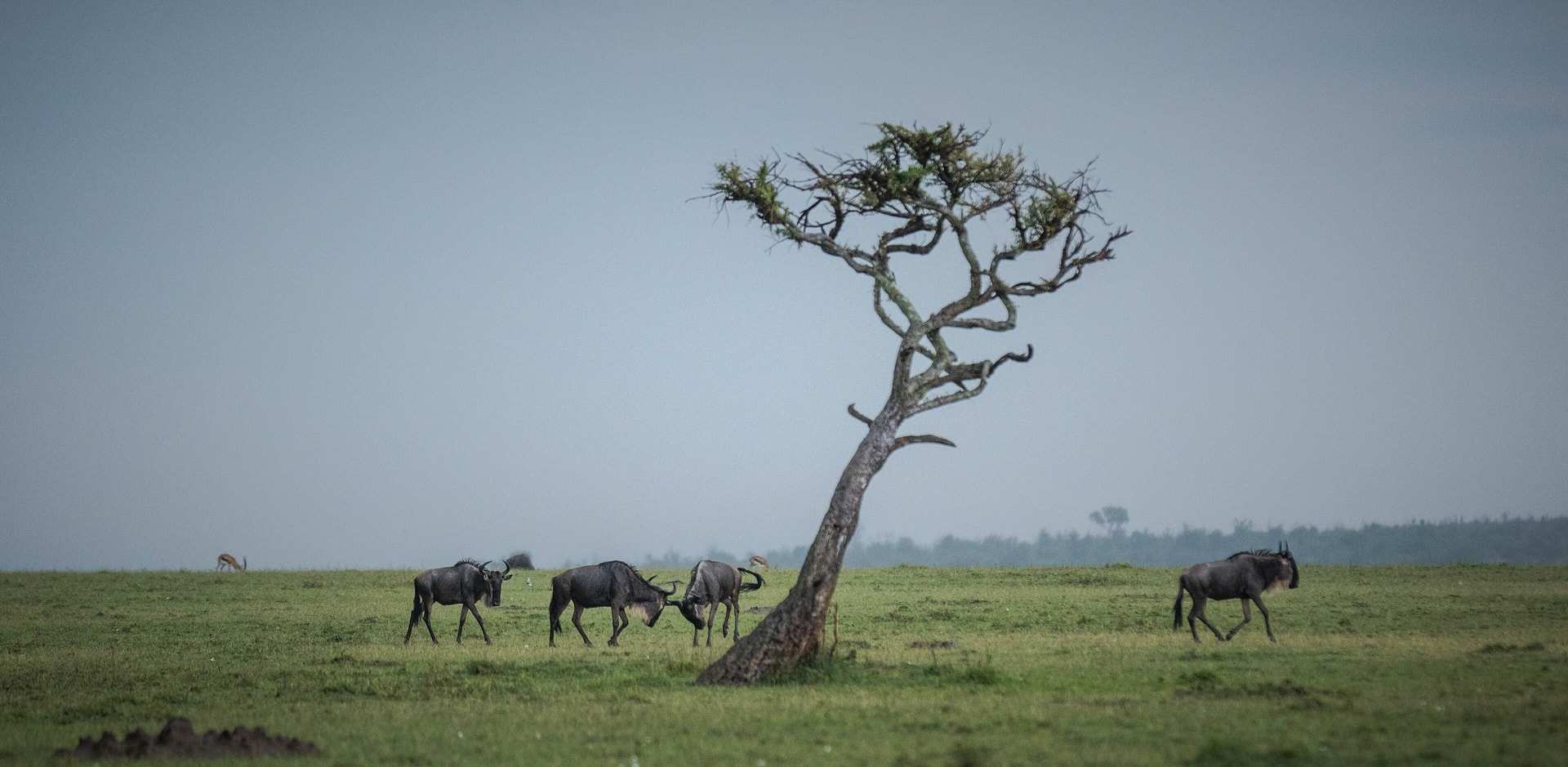
The wildebeest, with zebra and gazelle, spend the year moving in a loop between Tanzania’s Serengeti and Kenya’s Maasai Mara, following rain and new grass. They usually cross into the Mara during July, stay through August and September, and drift back south in October. The river crossings, when the herds bunch on the bank of the Mara River and then go in, are seen most often from mid-July to late August.
The herds move on rain and grass, so no one can sell you a crossing on a given date. A herd can stand on the bank for days and then cross in twenty minutes while you are at lunch. If a crossing is the reason for the trip, give the Mara four or five nights and treat it as likely rather than certain. Our wildebeest migration guide covers the whole year’s loop, including the months the herds spend in Tanzania.
The Mara is still good when the herds are away. Lion, cheetah, elephant and leopard live there all year, and in the quiet months you share them with far fewer vehicles.
The rainy months: March to May and November
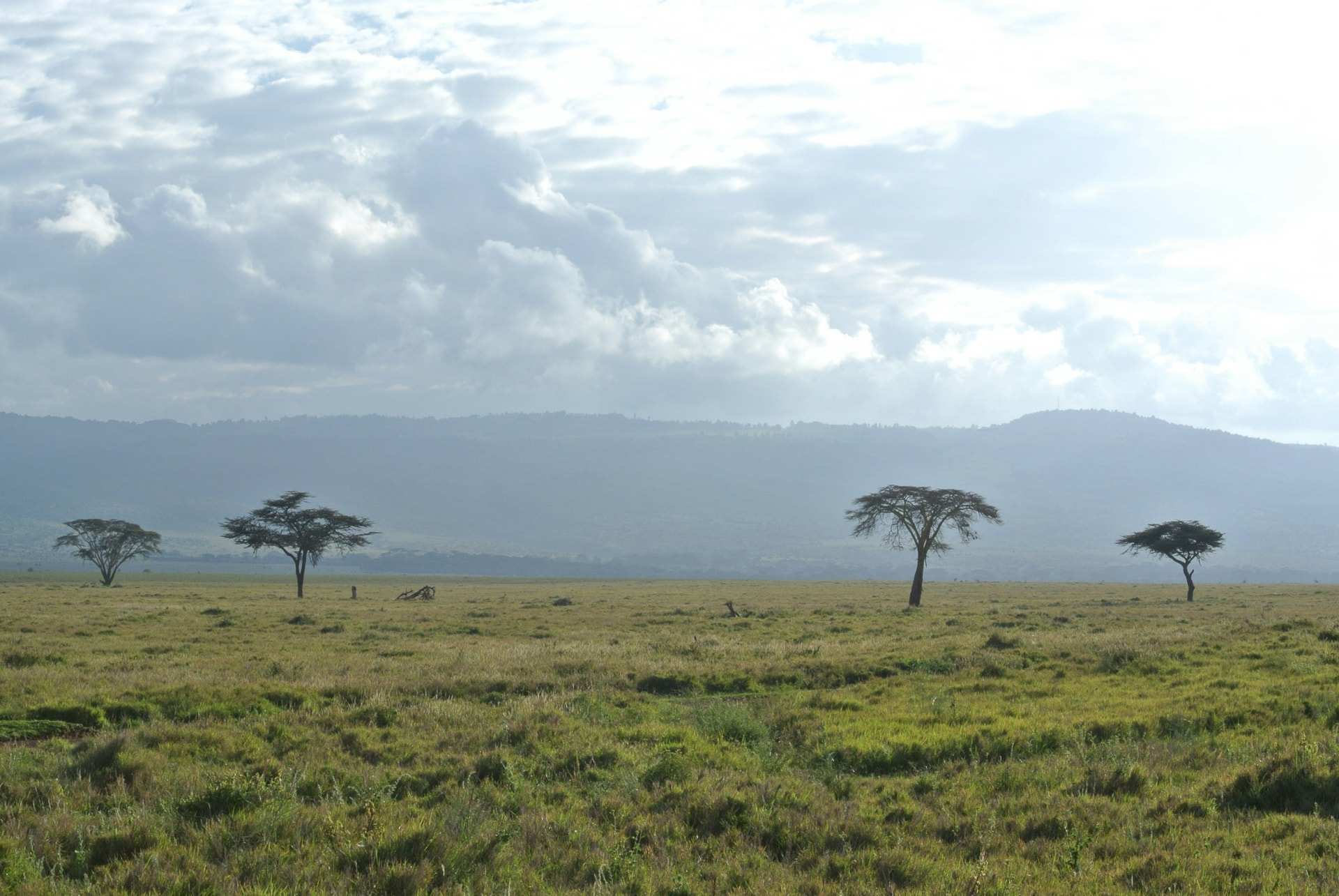
March is a changeover month. The first half is often dry and good value; the long rains usually arrive towards the end. April and May are the wettest months inland and the cheapest time to travel. Some camps close. Those that stay open are quiet, the country turns green within a couple of weeks, the birding is excellent and there are young animals about. The trade is longer grass, slower roads and more mud.
June is when the rains ease and the country dries out. It is a good month that people overlook: cool, green, quiet, and often still on lower rates before July. November brings the short rains, usually as brief afternoon storms, and many camps are on low-season rates. December starts wet and dries out, with festive rates from around the third week.
For a first safari with one chance at it, we would still send you in a dry month. For a second trip, or for Kenyan residents with a long weekend, the rainy months are often the best value in the country. Our resident rate pages show the same room in the same lodge priced across the year, and Kenya safari cost explains how the season moves the price.
Which month suits which park
The Mara is covered above. Elsewhere the pattern is the same, with local differences.
Amboseli is best in the dry months, when the elephants come in to the swamps fed by water from Kilimanjaro and the dust makes the light soft and warm. The mountain itself is most often clear in the early morning and the late afternoon, and more often hidden in cloud during the rains.
Samburu and Laikipia, in the north, are semi-arid and get less rain than the south. In the dry months the game in Samburu gathers along the Ewaso Nyiro river, and the rains turn the scrub green for a few weeks. They work in more months of the year than the Mara does.
The Rift Valley lakes, Nakuru, Naivasha and Bogoria among them, are about birds as much as mammals. Flamingo numbers rise and fall with the water level and cannot be predicted by month.
The coast runs on a different clock
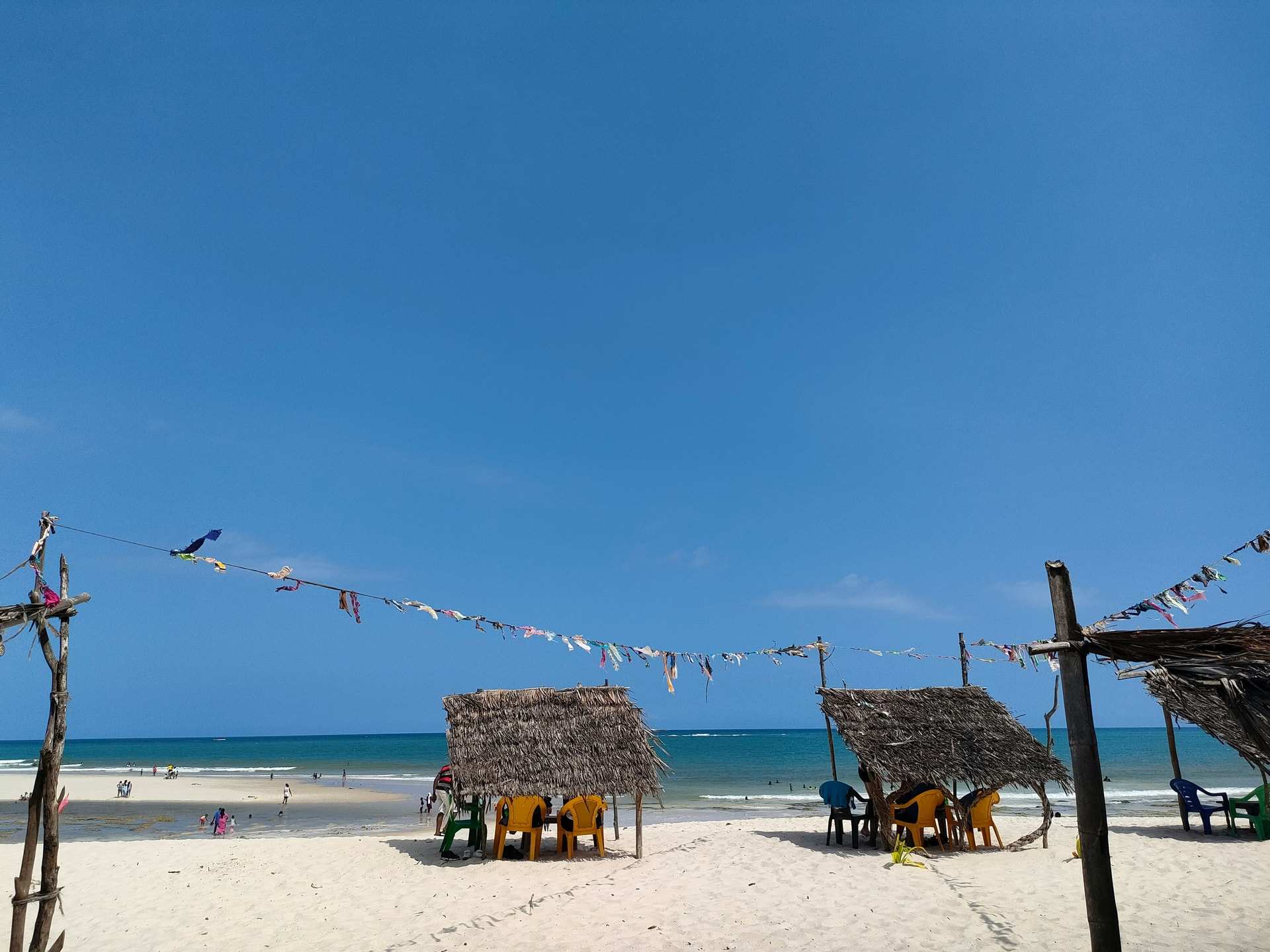
The coast is warm all year and follows the monsoon winds rather than the inland pattern. From December to March the north-east monsoon brings hot, calm, mostly dry weather and a flat sea, good for snorkelling and diving. From about July to October the south-east monsoon blows harder, the sea is livelier and the weather is mostly dry; this is the main season for kitesurfing at Diani. April to June is the wettest period on the coast, with May usually the wettest month, and some beach hotels close for part of it.
Because the bush and the coast do not peak together, a safari followed by a week at Diani, Watamu or Lamu works in most months of the year. The Kenyan coast packing list covers what to bring.
The best month for what you want
This is the list we use on the phone.
- The herds and a chance of a river crossing: mid-July to early September, booked well ahead.
- Dry-season game with fewer vehicles: January and February.
- Photography: February for short grass and clear air, or September for the herds with slightly fewer vehicles than August.
- The lowest prices: April and May, then November.
- Birding: November to April, when the migrant birds from Europe and Asia are here.
- A honeymoon with a beach: February or September, when both the bush and the coast are dry.
- Families: the school holidays decide it. Our school holidays calendar has the Kenyan, British and American term dates, and the camps with family rooms go first, so tell us early.
If you are weighing Kenya against somewhere else for the same dates, when to go sets every country we sell against the calendar. Once you have a month, our itineraries show the routes we build around it. Give us your dates and we will tell you what that fortnight looks like on the ground and where your money goes furthest.