On this page
- What happens on a safari day?
- How long should a first safari be?
- Is Kenya a good first safari?
- Should you drive or fly between parks?
- When is the best time for a first safari?
- What does a first safari cost?
- What will you be sitting in?
- What do you need to enter Kenya?
- What should you pack?
- Why plan it with a Nairobi agency?
A safari is a slow business. You go out in a vehicle with a guide who reads tracks, and you look. Nobody walks you round anything. Some mornings you find a leopard in a fig tree before seven. Other mornings you get an hour of coffee and a hundred zebra doing very little, and that turns out to be the part people describe when they get home.
This page covers the questions first-timers ask us most, in roughly the order they ask them.
What happens on a safari day?
Almost every safari day in Kenya follows the same pattern, and once you know it the rest of the planning makes sense.
Someone knocks on your tent at about half past five with tea. You are out by six, because the animals are still moving and the light is soft. You drive slowly for three or four hours, stop somewhere with a view for coffee, and come back for a late breakfast. By eleven it is hot and the plains go still, so you sleep, swim or read. At about four you go out again and stay out until the light goes. Dinner is late, and most people are asleep by nine.
Two drives a day is the standard. Some camps offer a full day out with a packed lunch, which is worth doing once if you are after something specific, such as a cheetah hunt or the herds at the river. Conservancies can also run walks with an armed guide and night drives with a spotlight, which the national parks and the Mara reserve generally do not. The safari glossary explains the words you will meet on the itinerary.
How long should a first safari be?
Seven to ten days, including the journey. Five nights in the bush is enough to see a great deal without living in a vehicle, and three or four nights on the coast sends you home rested. Under four nights in the bush and a large share of the trip goes on getting there.
Stay put once you arrive. Three nights in one camp beats one night in each of three camps, because your guide needs a day to learn what you have not seen yet and you need a day to stop packing. The commonest mistake on a first itinerary is moving every morning. Two camps in a week is plenty; three is the most we would suggest for a first trip.
Is Kenya a good first safari?
We think it is the easiest place to start. Nairobi has direct flights from Europe, the Gulf and across Africa. The Maasai Mara is under an hour from Nairobi’s Wilson Airport by light aircraft, and the coast is a short flight the other way, so one trip can hold big game and the Indian Ocean without a long overland haul.
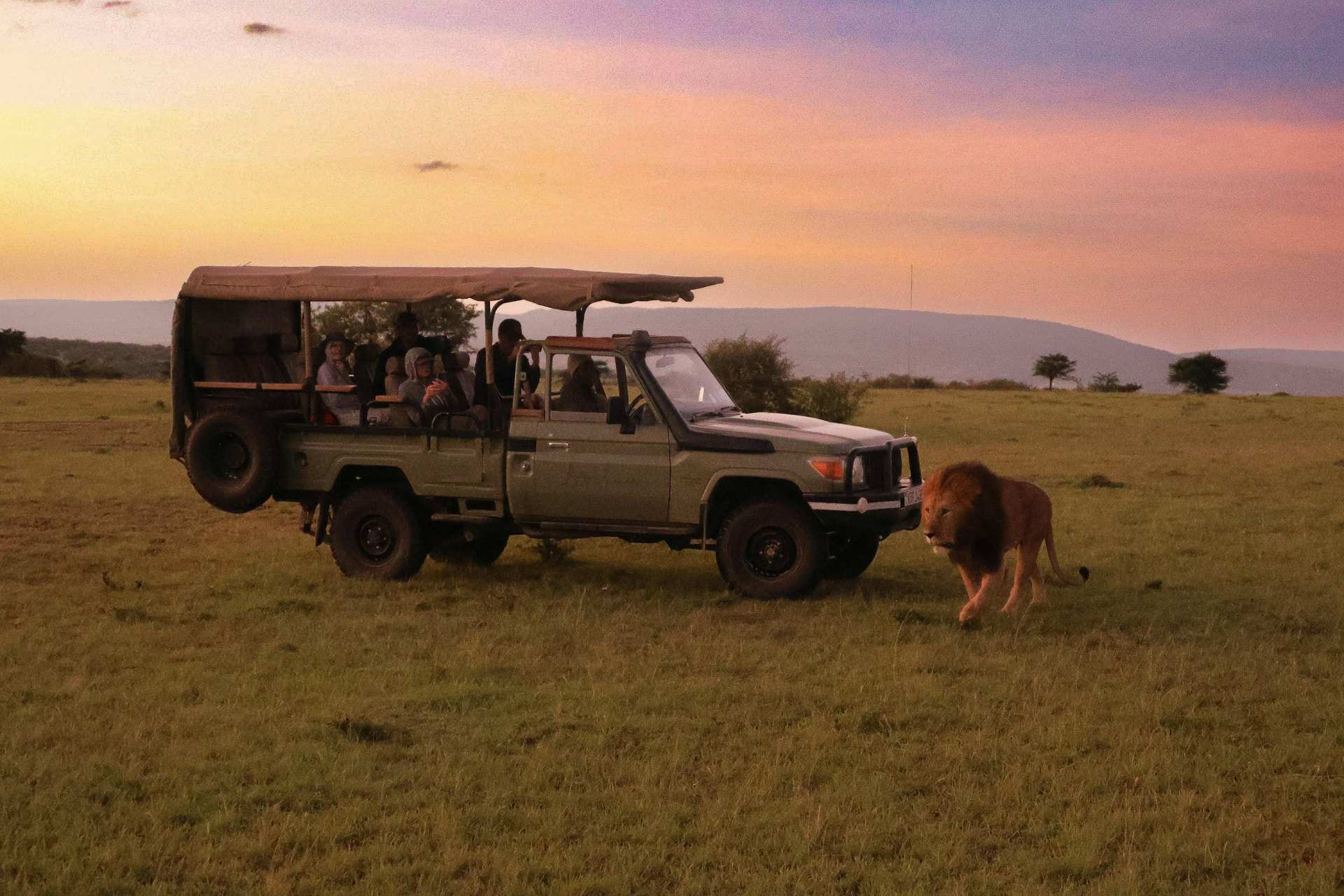
Kenya also gives you a choice of ground. The Mara and its conservancies have the density of game people picture. Amboseli has elephants under Kilimanjaro. Samburu and Laikipia are dry, northern and quieter, with animals you will not see further south. The Kenya page sets the regions out, and our itineraries show how we usually put two or three of them together.
Should you drive or fly between parks?
Drive, and the country between the parks becomes part of the trip: the Rift Valley escarpment, the farms and the market towns. You keep one guide and one private vehicle from start to finish. Fly, and a leg of five or six hours by road becomes under an hour in the air, with a new guide and the camp’s own vehicle waiting at each strip.
Neither is better across the board. Short trips usually fly. Longer trips, families and groups usually drive, because the vehicle is priced per car rather than per seat. Many of our trips drive one leg and fly the next. Road or flying? sets the two side by side.
When is the best time for a first safari?
The dry months: January and February, and July to October. The grass is short, the animals gather near water and the tracks are firm. July to October is when the wildebeest herds are in the Mara, and it is also the busiest and most expensive stretch of the year.
April and May bring the long rains, and November the short rains. They are the cheapest months and often very good for a second trip, but for a first safari with one chance at it we would still send you in a dry month. The best time to visit Kenya guide goes through the year month by month, and when to go sets Kenya against every other country we sell.
What does a first safari cost?
The camps are the biggest share of the bill and the widest range. The same week in the same parks can cost a third as much or three times as much, depending mainly on where you sleep. After that come the way you move between parks and the park or conservancy fees.
We do not print a single figure here, because a figure without dates, camps and party size is guesswork. Kenya safari cost explains what moves the price and shows the rates we hold. Tell us a budget and dates, and we will tell you what they buy.
What will you be sitting in?
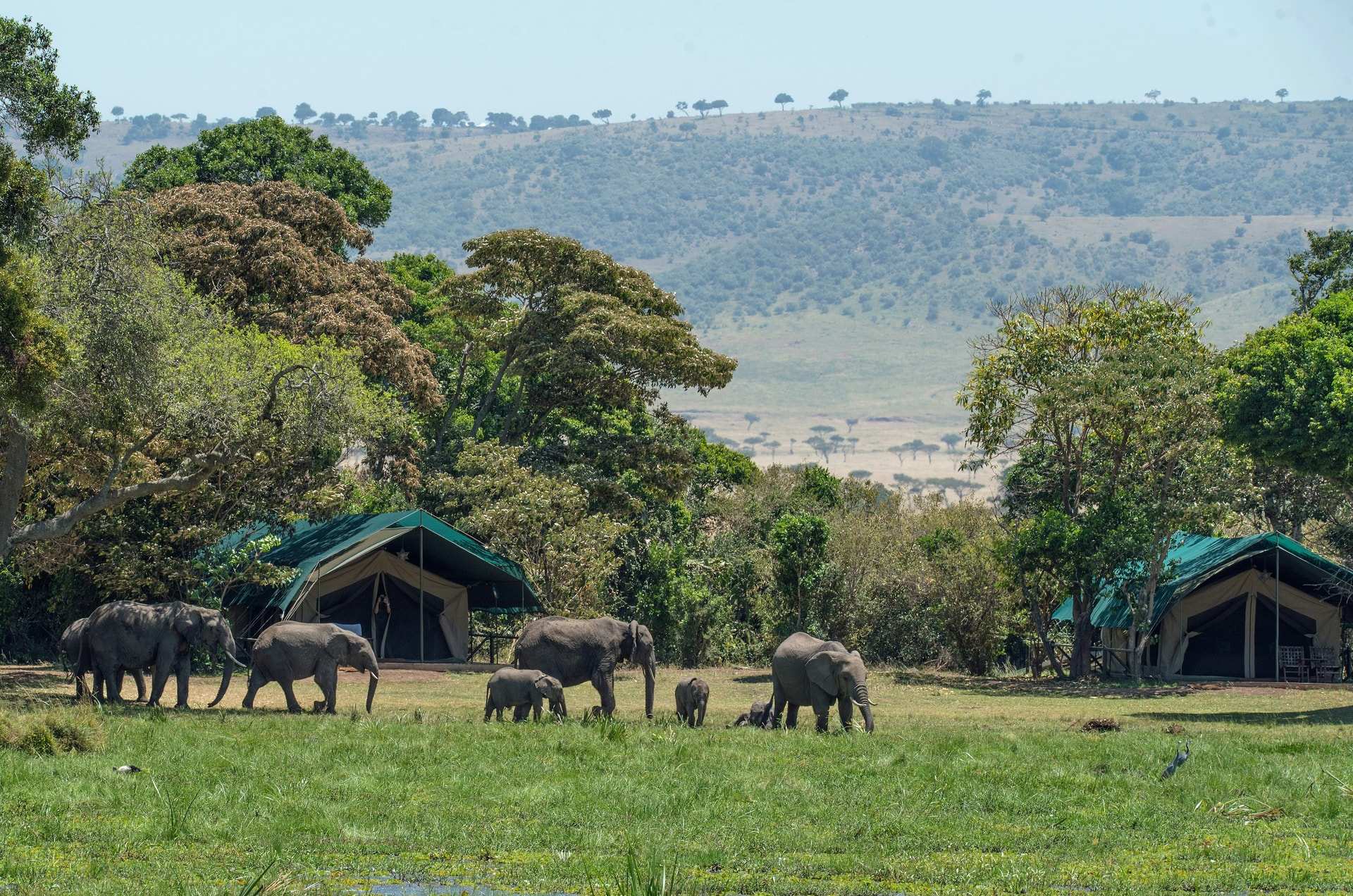
Either a pop-top Land Cruiser, whose roof lifts so you can stand and look out with shade overhead, or an open-sided vehicle with tiered seats and nothing between you and the view. The camp or the park usually decides which. Every road safari we run is in a private vehicle, so everyone gets a window. The safari vehicles guide explains the difference and which seat to ask for.
What do you need to enter Kenya?
Most visitors need an Electronic Travel Authorisation, applied for online before you fly. Kenya replaced its tourist visa with the eTA in January 2024. Citizens of East African Community states do not need one, and since July 2025 nor do citizens of most other African countries. Apply on the government portal and nowhere else. The Kenya eTA guide covers who needs one, the documents and the fee.
For vaccinations, malaria tablets and whether your route needs a yellow fever certificate, see a travel clinic six to eight weeks before you fly. We plan trips; a clinic will give you a better medical answer than we can.
What should you pack?
A soft bag, because light aircraft have shaped holds with no room for wheels or hard cases. Neutral colours, long sleeves for the evening, and a warm layer for the first drive of the day, because the Mara at six in the morning is cold. Camps do laundry, usually daily, so you need about half the clothes you first lay out. Binoculars, one pair each, if you own them. The full safari packing list has the rest, with quantities.
Buy travel insurance when you book, not the week before, and check that it covers medical evacuation from the bush.
Why plan it with a Nairobi agency?
We have planned trips from Nairobi since 1994. We are IATA accredited, so we issue your air tickets ourselves rather than handing that part to someone else, and we are members of KATA, the Kenya Association of Travel Agents. When an international flight moves, and one will, the whole trip sits in one file and one travel designer fixes it.
Tell us roughly when and for how long. We will tell you what that buys, and whether moving your dates by a few weeks would buy more.