On this page
- Where are the herds this month?
- When are the Mara River crossings?
- Kenya or Tanzania: which side should you watch from?
- What is calving season, and is it worth the trip?
- How many nights do you need to see a crossing?
- What else to do while you wait
- Where to stay for the migration
- Trips built around the herds
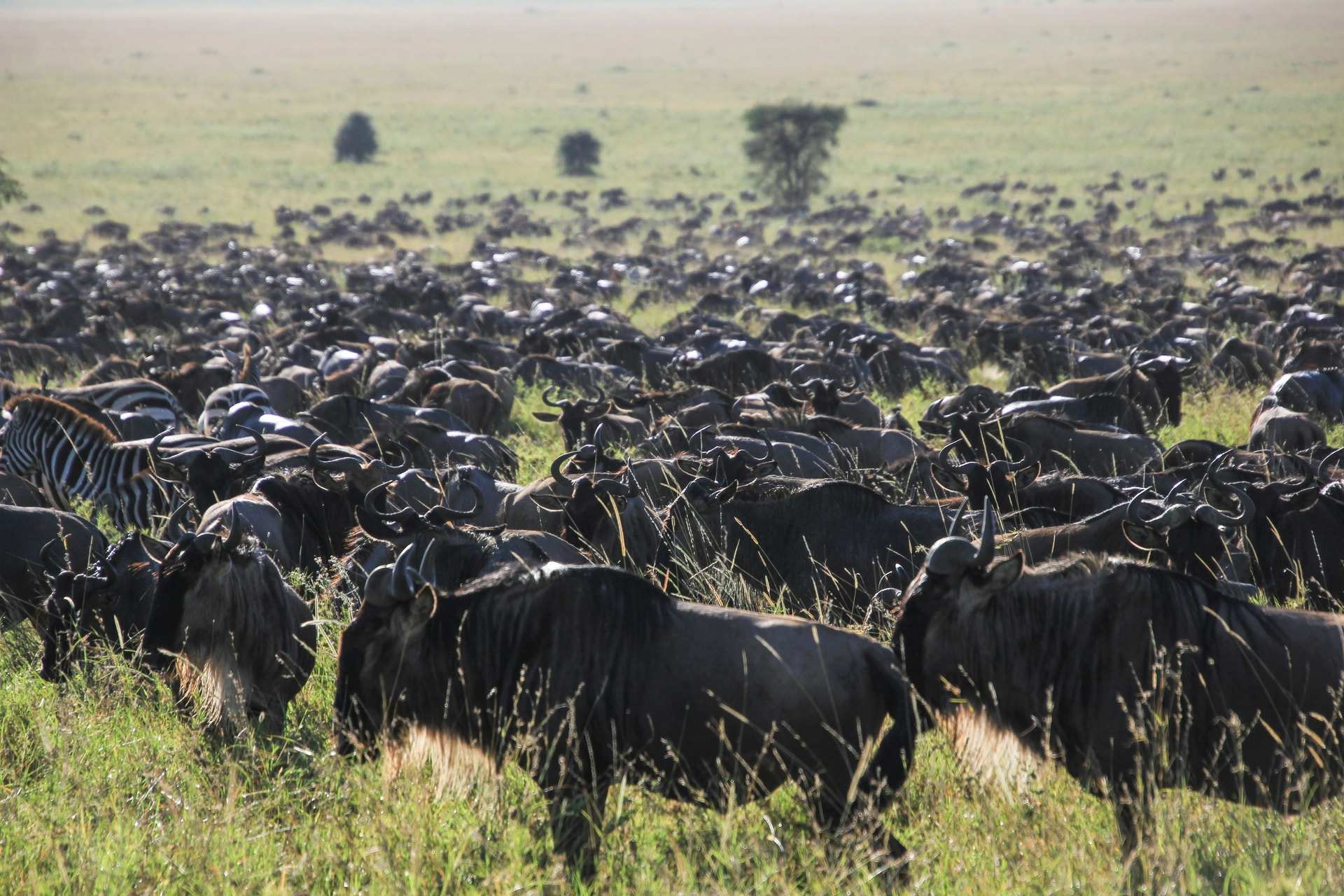
The herds spend roughly July to October in the north, where the Mara River runs between Kenya’s Masai Mara and Tanzania’s northern Serengeti. From December to March they are in the far south, on the short-grass plains around Ndutu, where the calves are born. The months in between are the herds walking from one end to the other.
What makes it hard to plan is that rain sets the timing, and rain does not keep a calendar. A late long rain can hold the herds in the south into April. An early dry season can bring the first columns to the Mara River in June. Every month below comes with the word “usually” attached.
Where are the herds this month?
| Month | Where the herds usually are | What is happening | Country |
|---|---|---|---|
| January | Southern Serengeti and the Ndutu plains | The herds settle on the short grass; the first calves arrive | Tanzania |
| February | Ndutu and the southern Serengeti | Calving at its height, with lion, cheetah and hyena close behind | Tanzania |
| March | Southern and central Serengeti | Calves strong enough to walk; the long rains begin | Tanzania |
| April | Central Serengeti, around Seronera and Moru Kopjes | The herds spread out in the rain | Tanzania |
| May | Central Serengeti towards the Western Corridor | The rut starts; long columns on the move | Tanzania |
| June | Western Corridor and the Grumeti River | Grumeti crossings; the leading herds turn north | Tanzania |
| July | Northern Serengeti, then the first herds into the Mara | The first Mara River crossings | Both |
| August | Masai Mara and the northern Serengeti | Crossing season at its height | Both |
| September | Masai Mara and the northern Serengeti | Crossings in both directions | Both |
| October | Masai Mara, then drifting south | The herds thin out late in the month | Both |
| November | Eastern Serengeti and the Lobo area | The short rains pull them south | Tanzania |
| December | Southern Serengeti | Back on the short grass before calving | Tanzania |
The loop covers something over 800 kilometres a year. The Mara Conservancy, which runs the Mara Triangle on the Kenyan side, counts about 1.25 million wildebeest in it, with 200,000 zebra and half a million Thomson’s gazelle moving alongside.
When are the Mara River crossings?
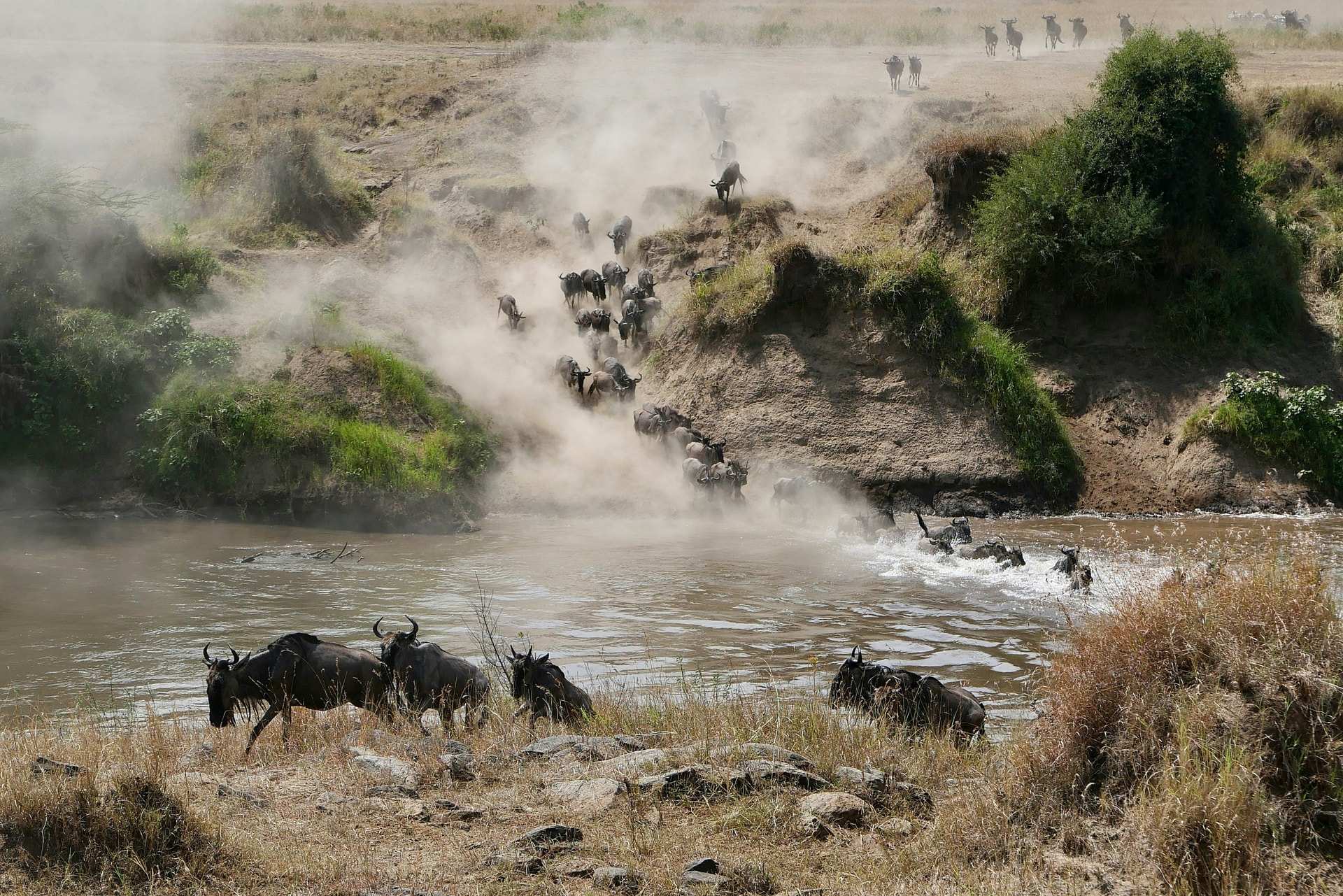
Crossings happen from July into October, and most of them in August and September. The Mara Conservancy puts the Kenyan season a little wider, starting “somewhere in June to July” and running until November.
A crossing starts long before anything crosses. The herds build up on the bank, sometimes for two or three days, and the animals at the front get more agitated by the hour. Then one goes, and thousands follow in twenty minutes of dust and crocodiles. Herds cross back the other way too, following rain on the far bank, so a river camp can see several crossings in a good week and none in a bad one.
The rules at the river are strict for a reason. You stay in the vehicle, off the roof and off the window ledge, and your guide keeps back from the crossing point. Animals that are crowded by vehicles tend to cross in the wrong place, at steep banks where they cannot climb out, and that is where the mass drownings happen.
Kenya or Tanzania: which side should you watch from?
The river runs through both countries, and both banks work. What differs is the country around the river: how busy it is, what it costs and how long it takes to reach.
The Kenyan side is the Masai Mara National Reserve, the Mara Triangle west of the river, and the private conservancies to the north and east: Naboisho, Olare Motorogi, Mara North, Ol Kinyei and their neighbours. The reserve and the Triangle hold the main crossing points. The conservancies do not sit on the river, so a conservancy camp drives into the reserve on crossing days, and in return gives you fewer vehicles, walking, and night drives the reserve does not allow. From Nairobi the Mara is one short flight from Wilson Airport or a day on the road.
One cost to know about: Narok County, which runs the reserve, charges non-resident adults USD 200 a day from July to December 2026, against USD 100 from January to June. Conservancy fees are usually folded into the camp’s rate instead.
The Tanzanian side is the northern Serengeti around Kogatende, and the Lamai wedge between the river and the border. There are fewer camps there and fewer vehicles at each crossing, and the park fees are set by TANAPA rather than the county. It takes more getting to: a flight from Arusha, or, from the Kenyan side, the route our cross-border trips use, Keekorok airstrip to Migori, the road across the border to Tarime, and a flight on to Kogatende.
There used to be a third herd to mention. The Loita wildebeest walked into the Mara conservancies from the Loita Plains every year. Mapping published by the Smithsonian’s Conservation Biology Institute in December 2025 shows that route shrank by nearly 90 per cent after 2020, and the migrating herd fell from over 100,000 to under 25,000 as fencing and subdivision closed it. Most of the animals that are left now stay in the conservancies all year.
What is calving season, and is it worth the trip?
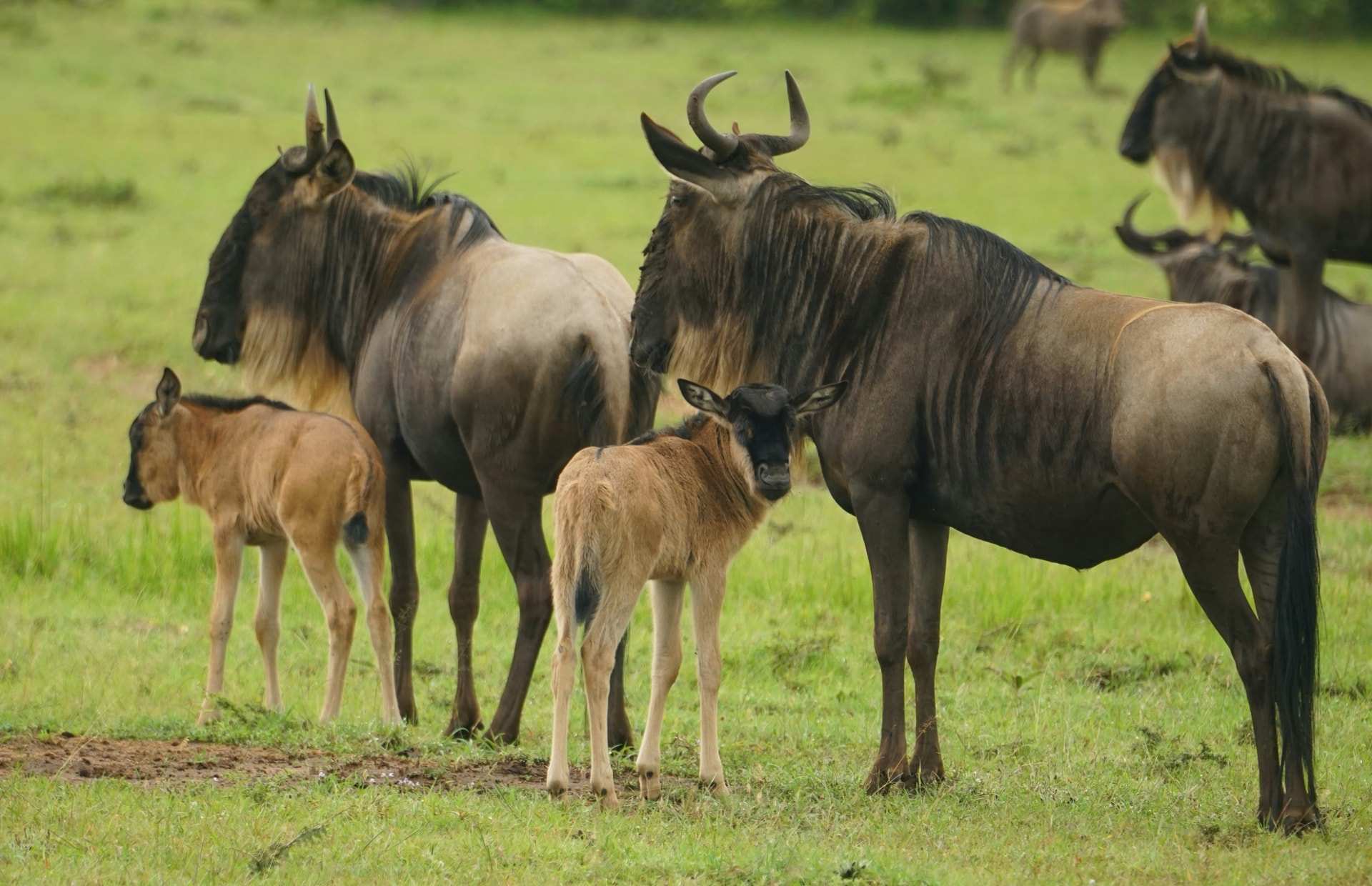
From late January to March, the herds are on the Ndutu plains, which straddle the southern Serengeti and the Ngorongoro Conservation Area. Around half a million calves are born each year, most of them in February, and Africa Geographic puts the peak at as many as 8,000 a day.
Lion, cheetah and hyena hunt the calving grounds every day, and for photographers it is the best predator action of the year. The grass is short, the rains have not yet set in, and there are far fewer vehicles than on the Mara River in August. The Ngorongoro Crater is next door, so a calving trip usually includes a day on the crater floor.
Calving is a Tanzania trip. None of it happens in Kenya, and the Kenyan conservancies in February are about resident game rather than the herds. The best time to visit Tanzania sets out the rest of the Tanzanian year.
How many nights do you need to see a crossing?
Four or five nights in one place, near the river. That is the same advice our best time to visit Kenya guide gives. A herd that sits on the bank for three days usually crosses in the end, and you want to still be there when it does.
Choose a camp close to the crossing points, in the reserve, the Triangle or at Kogatende, so the drive to the river is short. Take full-day drives with a packed lunch instead of two short drives and a return to camp at midday. A guide who reads the herds will sit at a quiet bank for two hours on a hunch, and that is often where the crossing happens.
Splitting four nights between two camps halves your time at the river. If a crossing is the reason for the trip, stay put. The rest of the Mara still has its resident lion, leopard and cheetah on the days the herds do not move.
What else to do while you wait
The crossings rarely fill a whole day, and the Mara and the Serengeti have more to them than the river.
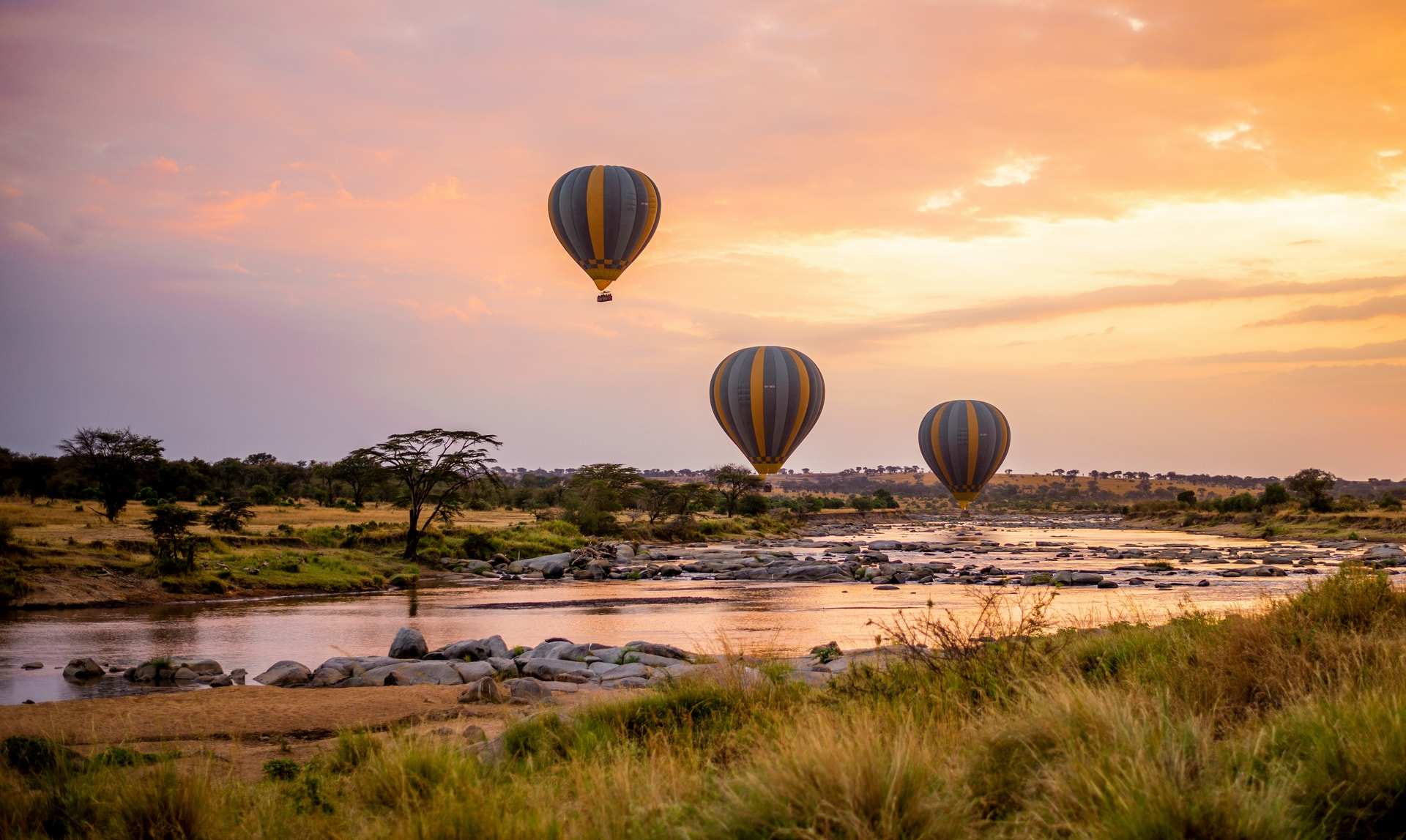
A balloon flight lifts off before sunrise, drifts over the herds for about an hour and lands for breakfast on the plains. It is the one view of the migration you cannot get from a vehicle.
In the conservancies you can also walk, which the reserve does not allow. An hour on foot with a Maasai guide, reading tracks and droppings, changes how the next game drive looks. The conservancies run night drives too, and most camps can arrange a visit to a Maasai village, organised with the community and paid to the community.
Where to stay for the migration
The right camp depends on the month.
July to October, Kenyan side. River camps in the reserve or the Triangle put you closest to the crossings: Sala’s Camp and Elewana Sand River, both in the reserve’s southern corner on the Sand River, and the Governors’ camps on the Mara River itself. Angama Mara sits on the escarpment above the Triangle. For quieter game drives and the option to walk, a conservancy camp such as Saruni Basecamp in Naboisho, with drives into the reserve on crossing days.
July to October, Tanzanian side. Olakira, a camp that moves twice a year to follow the herds and spends the dry season on the Mara River at Kogatende. &Beyond Serengeti Under Canvas works the same way, moving through the year to stay near the herds.
December to March. Camps around Ndutu, including the mobile camps that come south for calving.
Trips built around the herds
Every trip below is on the site with its days laid out and its price read from the itinerary, not typed into this page.
- Migration Extravaganza: four nights at Sala’s Camp, then across the border to Olakira. Both banks in one trip.
- Wildebeest Tales: five nights in the Mara with Saruni, three on the reserve edge and two in Naboisho.
- Classic Mara Safari: three nights at Governors’, flown in, and nothing else on the diary.
- SkySafari East Africa: the Mara and the Serengeti on one flying route.
Kenyan residents can see the Mara camps priced across the year on our Masai Mara resident rates. Before you travel, the safari packing list covers what to bring. The Mara and the Serengeti are both malaria areas, so book a travel clinic appointment well before you fly.
The river camps are the first to fill for August. If your dates are fixed, tell us early and we will start looking for rooms.
Sources
- maratriangle.org/maratriangle/wildebeest-migration
- africageographic.com/stories/the-great-wildebeest-migration
- cms.int/publication/fact-sheet-wildbeest-migration
- eurekalert.org/news-releases/1108543
- masaimara.ke/entry-fees
- tanzaniaparks.go.tz/tourism/visitor-information/tariff
- visa.immigration.go.tz/guidelines