Checklist
Safari packing list for Kenya
A working checklist for a week on safari in Kenya: the bag, the layers for a cold six o'clock start, optics, health and documents, with quantities for seven nights and what changes by season.
Safari packing list for Kenya
Most people pack about twice what they use on safari. Camps do laundry, the vehicles have limited space, and the light aircraft that fly to the airstrips are strict about bags. A safari rewards a small bag more than most holidays do.
The list below is for seven nights in the bush, with laundry at camp. For a longer trip, do not add clothes, because the laundry covers it. If you are flying between camps, the airline sets the luggage limit, and we confirm it in writing for your flights before you pack. Flying safaris explains how the bush flights work. If you are driving between parks in our vehicle, there is more room, but a soft bag is still easier to load and unload every few days.
Two things change with the season. From June to August the first drive of the day is cold in the highlands, so the warm layers and gloves below matter most then. In April and May, and in November, expect afternoon rain: make the outer jacket waterproof and bring the second pair of shoes. The best time to visit Kenya guide explains what each month is like.
The bag
Pack the soft bag with the things you need for the last night on top, and keep anything you cannot replace in the daypack, which stays with you on flights and in the vehicle.
Clothes
Neutral colours throughout: khaki, olive, beige, stone and grey. Bright white shows the dust within an hour, and dark blue and black attract tsetse flies in the areas where they live. Layers work better than one warm coat, because a morning drive starts cold and ends hot, and you will take things off as the sun climbs.
Nobody dresses for dinner at a safari camp. Clean trousers and a shirt with a collar are as smart as it gets, and most guests come to the fire in whatever they wore on the evening drive. If a hot-air balloon flight over the Mara is on your itinerary, it lifts off around dawn, so wear every warm layer you packed and a hat that will not blow away.
Optics and camera
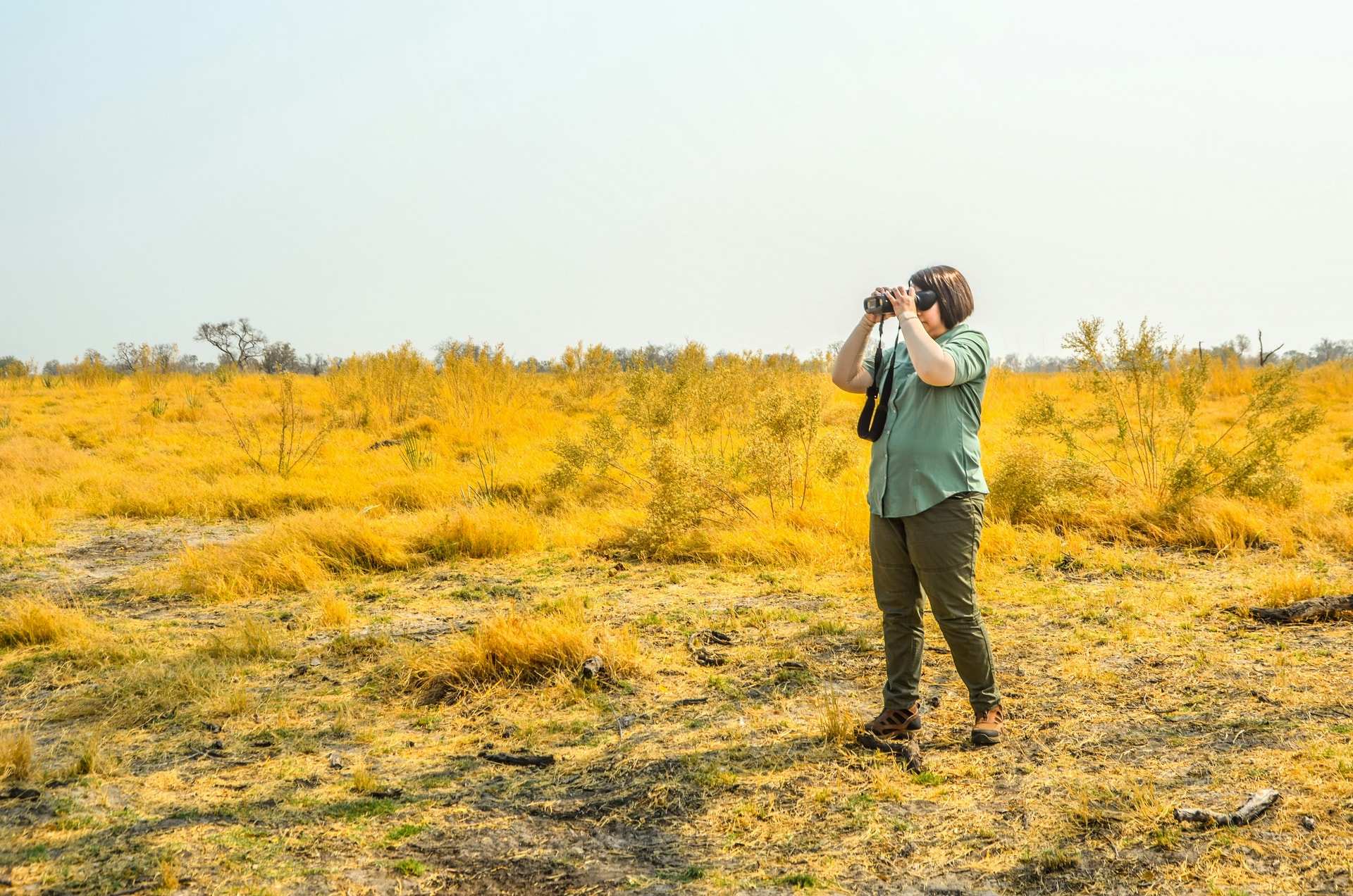
Binoculars matter more than a camera. Most of the animals you see will be further away than you expect, and a good pair lets you watch behaviour rather than a distant shape. Magnifications of eight or ten times are the usual choice; stronger than that is hard to hold steady in a vehicle.
The safari vehicles guide explains which seat gives you the best angles.
Health and toiletries
For vaccinations, malaria tablets and whether your route needs a yellow fever certificate, see a travel clinic six to eight weeks before you fly. The items below assume that conversation has happened. Most camps provide soap, shampoo and insect spray, so you can leave the full-size bottles at home.
Documents and money
Most visitors need a Kenyan eTA before they fly, and the Kenya eTA guide explains who does. Keep travel insurance details, including the emergency number, where you can reach them without signal. Card payments work in Nairobi and on the coast, less so in the bush, so carry some cash in small notes for tips and small purchases.
Leave at home
Hard suitcases, because they will not fit the hold of a light aircraft. Camouflage clothing, which is associated with the military and is illegal for civilians in some neighbouring countries, including Tanzania. Plastic carrier bags, which Kenya has banned since 2017. A drone, unless permission has been arranged long in advance. And about a third of the clothes you first laid out.
Travelling with children? The same list works, scaled down, with one addition: a small bag of things to do in the middle of the day, when the adults sleep and the children do not.
Questions we are asked
How much luggage can I take on a safari flight?
What colours should I wear on safari?
Do I need hiking boots for a safari?
Will the camps do my laundry?
What should I pack for the rainy season?
Can I charge my phone and camera at camp?
Read next
- Your first safariWhat a safari actually is, and how to choose your first one.
- Safari vehiclesPop-top or open-sided, and which one you will get.
- Best time to visit KenyaMonth by month, honestly graded, including when not to come.
- Practical facts by countryPlugs, currency, time zone, driving side, SIM, tipping and tap water.
- Packing list for the Kenyan coastDiani, Watamu, Malindi and Lamu need less than you might think, plus a few things you would not guess: reef shoes for low tide, a rash vest for the reef, and clothes that cover your shoulders for the old towns.
Ask the question this page did not answer
Tell us your dates and who is coming. A travel designer replies within one working day.