On this page
- What kind of vehicle is used on a Kenya safari?
- The pop-top Land Cruiser
- The open-sided game viewer
- Which seat should you ask for?
- How many people ride in a safari vehicle?
- Safari vehicles and photography
- Dust, cold and rain: dressing for the vehicle
- What else is in the vehicle
- Which vehicle comes with which trip?
You will spend more waking hours in this vehicle than in your room, so it is worth knowing what to expect. On our trips you will meet two kinds of safari vehicle: the pop-top Land Cruiser and the open-sided game viewer. They are not interchangeable, and which one you ride in usually depends on where you are staying rather than on what you paid.
What kind of vehicle is used on a Kenya safari?
A game-viewing vehicle has to solve one problem. You need to stand or sit high and see out in every direction, and you also need shade, some shelter from dust, and a place to rest a camera.
The pop-top solves it with a roof. The open-sided vehicle solves it by taking the sides away. Both are built on four-wheel-drive chassis, almost always Toyota Land Cruisers in Kenya, because the tracks inside the parks are rough, and in the rains they are deep mud.
The pop-top Land Cruiser
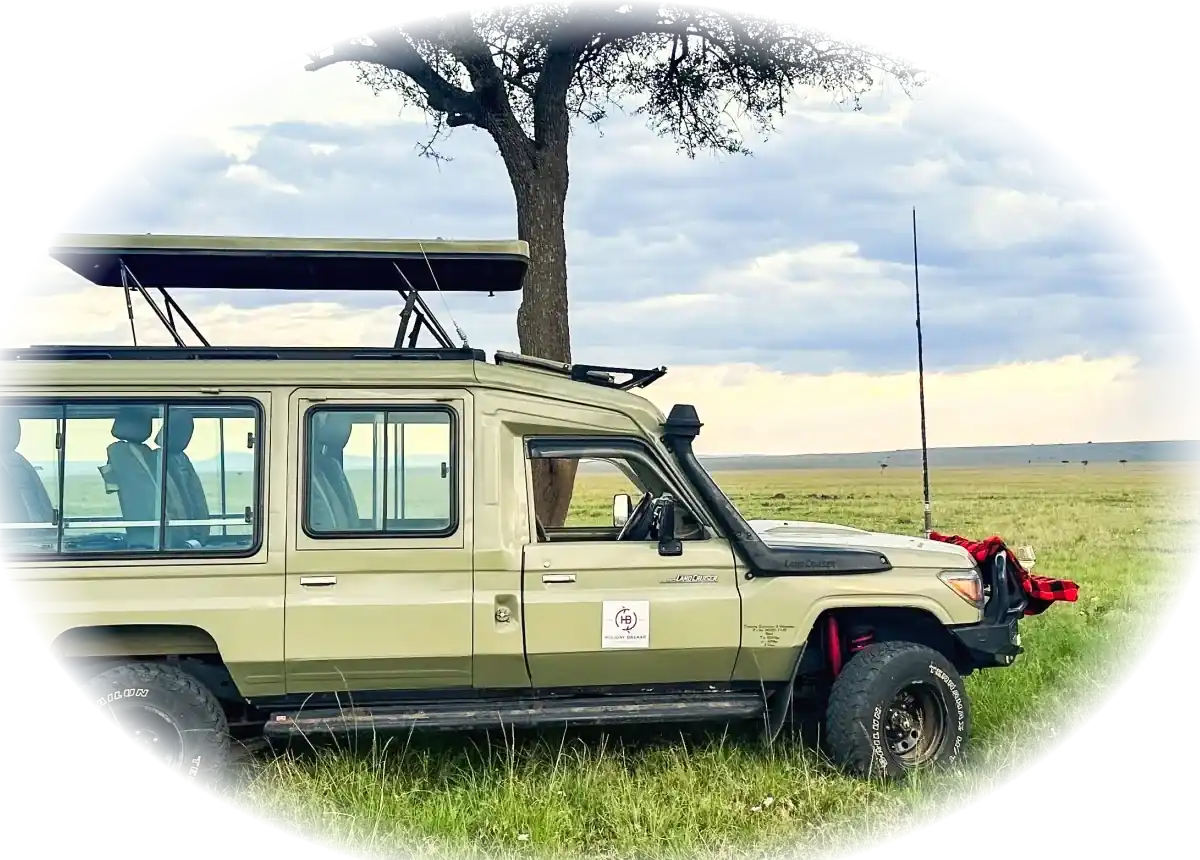
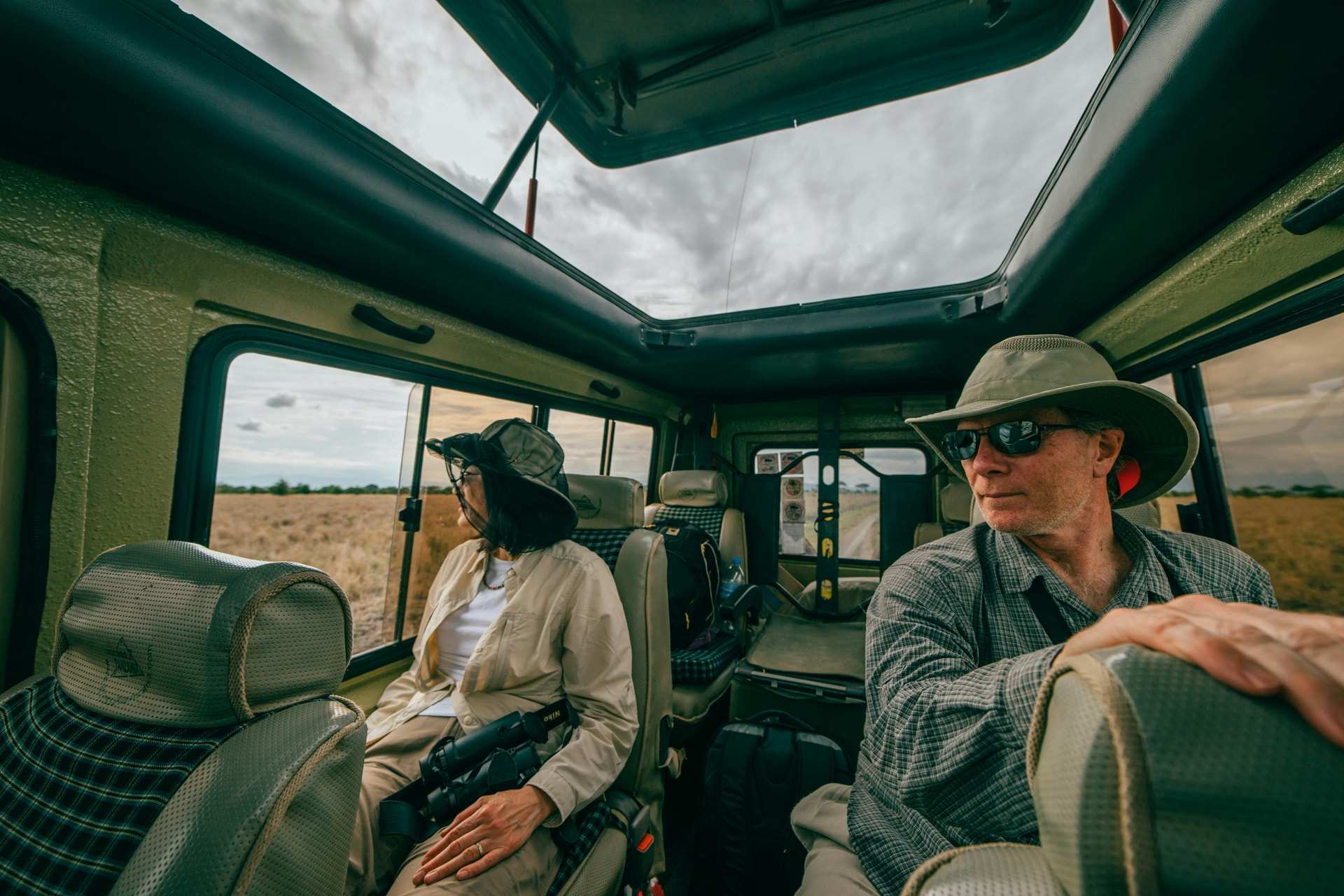
A section of the roof lifts on struts, usually by about half a metre. When the vehicle stops at a sighting you stand up inside, with your head and shoulders out through the gap and the raised roof shading you. When you move on you sit down, and the sides and windows keep off most of the dust and wind.
This is the standard safari vehicle in Kenya. It is allowed in every national park, reserve and conservancy, it copes with cold mornings, rain and long road transfers between parks, and it is the vehicle we use on every road safari we run. Inside there are usually three rows behind the driver, each seat next to a window.
The drawback is the frame. When you stand up, the roof supports can appear at the edge of wide-angle photographs, and shooting low, at eye level with a lion, means sitting down and using the window.
The open-sided game viewer
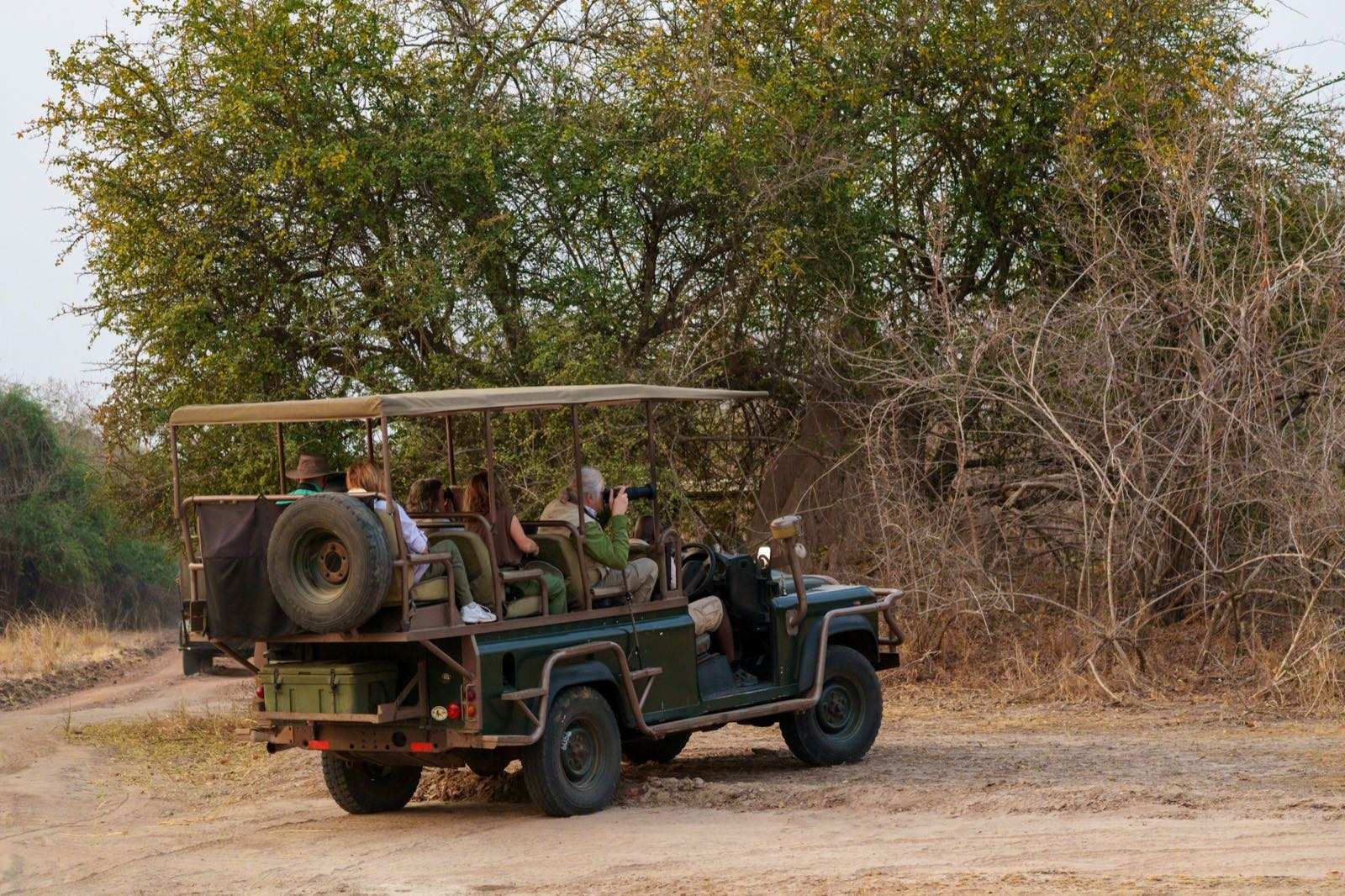
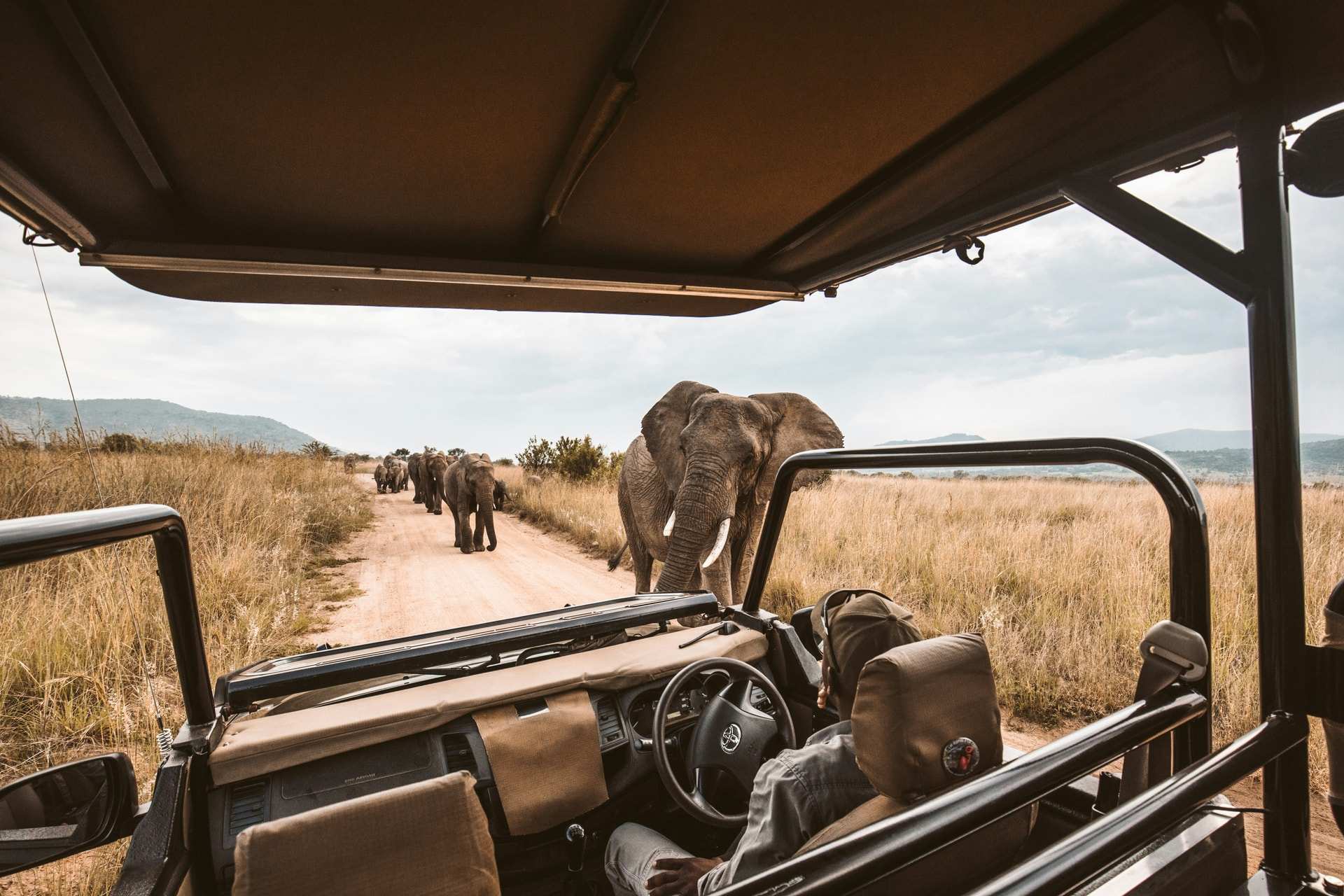
The sides are gone, the seats are raised in tiers so each row sees over the one in front, and a canvas roof gives shade. Nothing stands between you and the animals, and you hear far more: grass moving, a lion breathing, the call of a bird you would miss behind glass.
In exchange you get all of the dust, all of the sun and all of the cold. At six in the morning in the Mara, an open vehicle needs a fleece, a windproof layer and often the blanket the camp provides. In the rains you may get wet between the roof and the seat.
Open-sided vehicles are standard in the private conservancies and at many camps in and around the Maasai Mara, and most camps that fly guests in use them for their own game drives. Some national parks restrict them, so where you are going often decides it.
Which seat should you ask for?
In a pop-top, the middle row is the best seat for most people. It has the least engine noise and dust, it sits under the raised roof, and you can move to either side. The back row is bumpier on rough tracks.
In an open-sided vehicle, the back row is the highest, and gives the clearest view over everyone else’s heads. The front row, next to the guide, is the easiest place to talk to the guide and ask questions.
Whichever you are in, swap seats through the day. A good guide will position the vehicle so each side gets its turn with the light behind it.
How many people ride in a safari vehicle?
A pop-top usually seats six or seven, and an open-sided vehicle six to nine. On our road safaris the vehicle is private to your party, and we put no more than six people in it, even when the vehicle would take seven. That keeps a window for everyone and leaves space for bags and cameras.
We do not sell seats on shared departures. When you fly to a camp, you ride in the camp’s own vehicle, which is usually shared with other guests on the same drive. Most camps will keep a vehicle for your party alone for an extra charge, and some include it in the rate. If private game drives matter to you, tell us and we will choose camps accordingly.
The trade-offs between driving your own vehicle from park to park and flying to camps with their own vehicles are set out in Road or flying?, and the road safaris page covers what a driving day is like.
Safari vehicles and photography
Ask for a private vehicle first. The rest follows: the vehicle stops where you want it to, stays as long as the light lasts, and turns to put the sun behind you.
Bring a bean bag rather than a tripod. A tripod is useless in a moving vehicle and in the way in a parked one, while a bean bag over a window ledge or a roof rim is what most working photographers use here. Dust is the main problem. Change lenses as little as you can and keep the camera in a bag between sightings.
Most vehicles now have USB or 12-volt charging sockets, but not all, and some only work while the engine runs. Carry a power bank. The safari packing list has the rest of the camera kit.
Dust, cold and rain: dressing for the vehicle
Whatever the vehicle, the first drive of the day is cold in the highlands for much of the year, especially from June to August, and the middle of the day is hot. Layers work better than a single warm coat. Neutral colours show less dust, and a buff or light scarf keeps it out of your mouth on dry tracks. Sunglasses matter more than people expect, because of the glare off the plains as much as the sun.
What else is in the vehicle
Most safari vehicles carry a cool box with drinking water, a field guide or two to the mammals and birds, and a radio or phone the guide uses to hear from other guides. In the national reserve, news of a sighting travels fast and a leopard can draw a crowd. Many conservancies cap the number of vehicles allowed at a sighting, and that cap does more for the quality of a game drive than anything built into the vehicle itself.
Travelling with young children? A private vehicle means you stop when they need to stop and head back to camp when they have had enough, rather than when a shared vehicle’s other guests do. Tell us the ages when you enquire, because some camps set minimum ages for game drives and we plan around them.
Which vehicle comes with which trip?
Our road safaris run in private pop-top Land Cruisers. Conservancy and fly-in stays usually add the camp’s open-sided vehicle for game drives, because that is the camp’s own vehicle and its own rules. Many trips have both: a pop-top for the drive between parks and an open vehicle at the camp.
Each of our itineraries says how you travel between parks. If it is not clear which vehicle you will be in on a given day, ask and we will tell you. New to safari altogether? Start with your first safari, and the safari glossary explains the words you will see on the itinerary.