On this page
- Seychelles weather by month
- The calm months: April to May, October to November
- The south-east trades: June to September
- The north-west monsoon: December to March
- Diving, whale sharks and turtles
- Mahé, Praslin and La Digue by season
- What each month costs
- Festival Kreol
- Seychelles after a Kenya safari
- When we would go
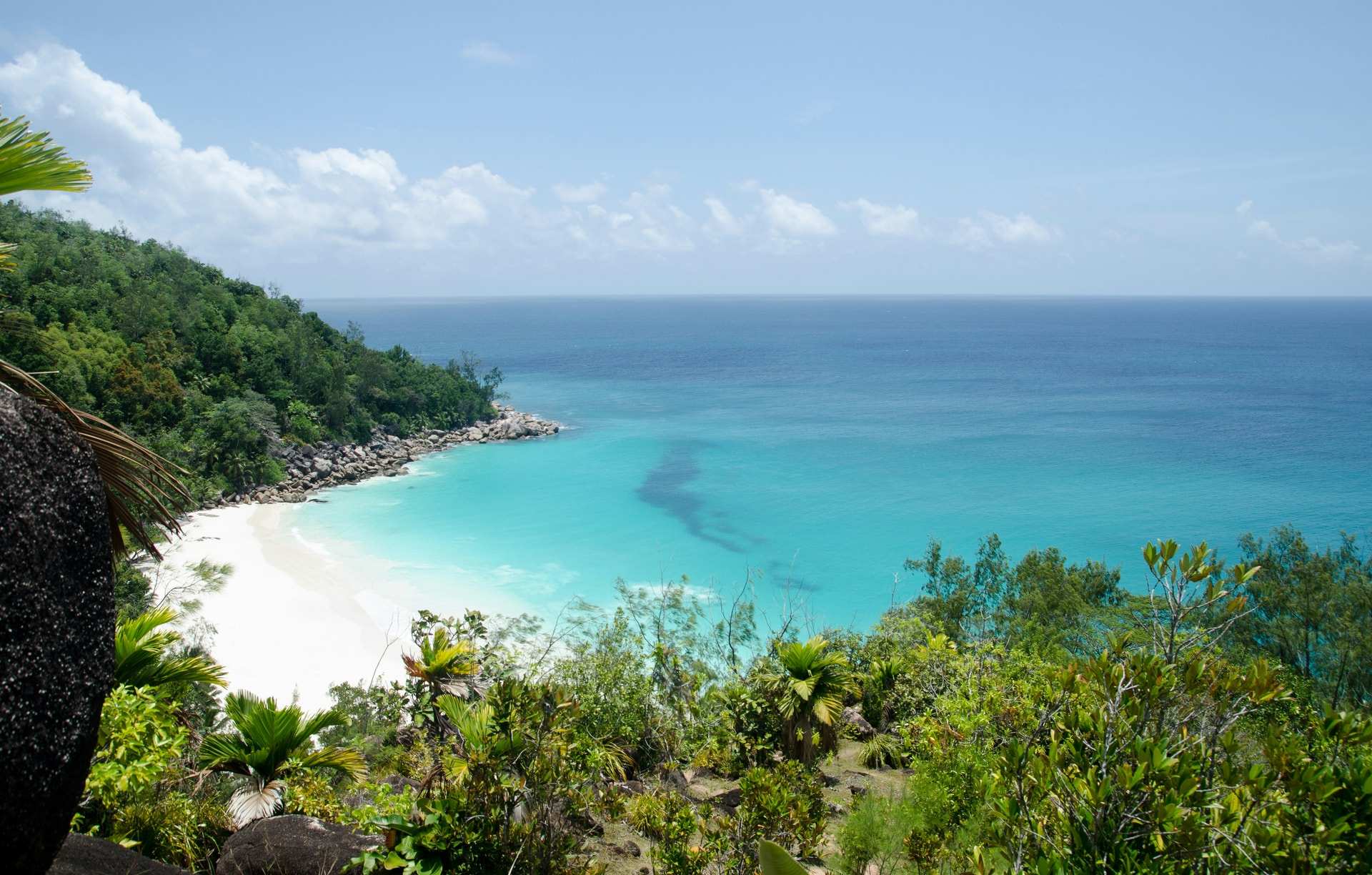
The best time to visit Seychelles is April and May, or October and November. These are the calm spells between the two trade winds. The wind drops and the sea goes flat, which makes them the best months for snorkelling and diving. October has more dry days than any other month.
The rest of the year still works, with trade-offs. From about June to September the south-east trades blow: dry, cooler, and windy enough to roughen the beaches that face them. From about December to March the north-west monsoon brings the heat, the humidity and most of the year’s rain.
The months we would plan around are December and January, the wettest of the year, which also carry peak prices over Christmas and New Year.
Seychelles weather by month
| Month | Weather | Sea and wind | Price level | Our verdict |
|---|---|---|---|---|
| January | The wettest, most humid month | North-west monsoon; swell on north-west coasts | High, peak over New Year | Avoid |
| February | Hot and wet, rain easing | North-west winds | Mid | Shoulder |
| March | Much less rain, more sunshine | Winds lighten | Mid | Shoulder |
| April | Calmest and warmest, above 32°C | Light, variable winds, flat water | Mid, high at Easter | Best |
| May | The sunniest part of the year | Calm early, the trades arrive late | Mid | Best |
| June | Dry, cooler | South-east trades build; rough south and east coasts | Mid | Shoulder |
| July | Coolest and driest | Trades at full strength; seaweed on exposed beaches | High | Shoulder |
| August | Windy, rain varies a lot year to year | Trades; whale sharks start off Mahé | High | Shoulder |
| September | Wind easing, showers late in the month | Whale sharks | Mid | Shoulder |
| October | The most dry days of the year | Winds weaken, clear water | Mid | Best |
| November | Warming, rain returns with plenty of sun | Calm; turtles nesting | Mid | Best |
| December | Wet and humid | North-west monsoon returns | Peak at Christmas | Avoid |
Seychelles is warm in every month, usually somewhere between the mid-20s and the low 30s. What changes is the wind, the rain and which side of each island is calm.
The calm months: April to May, October to November
Twice a year the wind swings round, from north-west to south-east in April and May and back again in October and November. In between, the wind dies away and the sea flattens. These are the months divers and snorkellers wait for, when the water is flat enough to see a long way and the boat crossings between the islands are smooth.
April is the warmest month and the calmest. May is the sunniest part of the year, though the trades usually arrive before it ends. October has the highest number of dry days of any month, and November keeps most of that sunshine as the rain slowly returns. For a honeymoon or a first visit, these are the four months we steer people towards. Our honeymoon planning usually starts from them.
The south-east trades: June to September
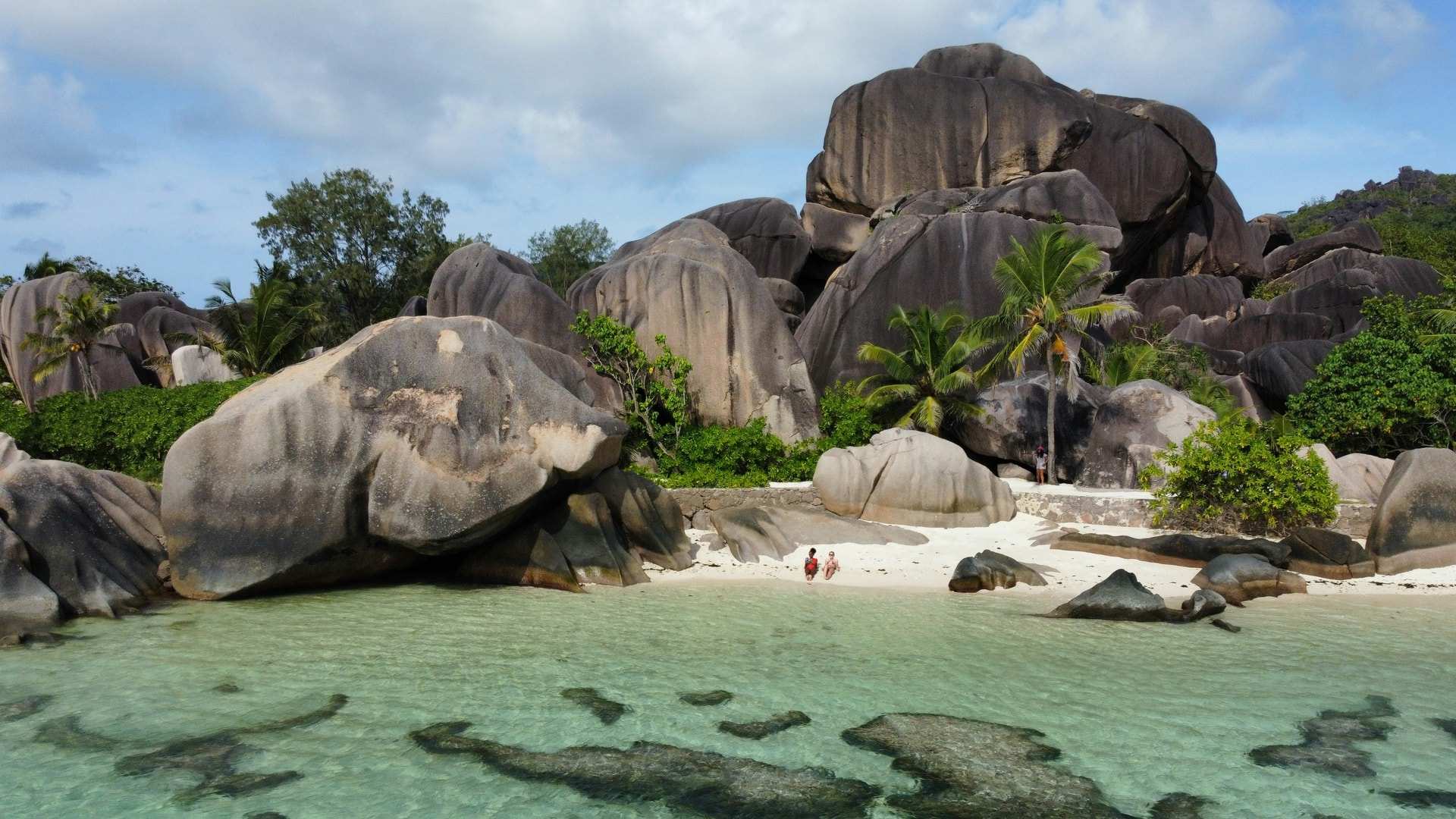
This is the dry season, and the coolest. The south-east trade wind blows most days, at its strongest in July and August. It keeps the heat off, but it also pushes swell and seaweed onto the beaches that face south and east, and those can be rough and murky for weeks at a time.
The fix is choosing the right coast. The north-west side of each island sits in the lee of the wind: on Mahé that is Beau Vallon and the bays around Port Launay; on Praslin, the north-west coast around Anse Lazio. A good hotel on the sheltered side makes July a very pleasant month. The ferry and small-plane crossings to Praslin and La Digue are bumpier in the trades, and island hopping is easier to plan with a spare morning in hand.
The north-west monsoon: December to March
The wet season is hot, humid and green. December and January bring the most rain, often as heavy downpours that pass within the hour. The wind comes from the north-west, so the swell now reaches the north-west coasts, including Beau Vallon, and the south and east sides of the islands are the calm ones.
February is still wet, and March brings a clear drop in rain and a lot more sunshine. The Vallée de Mai on Praslin is at its greenest in these months, and the walk through its palm forest stays shaded in any weather.
Cyclones are rare on the main islands. Mahé, Praslin and La Digue lie about four degrees south of the equator, north of the usual cyclone tracks, and storms in the region normally pass far to the south. The remote outer islands are more exposed.
Diving, whale sharks and turtles
The clearest water comes in the calm months, April to May and October to November. For a first snorkel, the Sainte Anne Marine Park off Victoria is sheltered enough to work in most weeks of the year.
Whale sharks pass the west coast of Mahé from about August to November, most often in September and October. The Marine Conservation Society Seychelles runs its monitoring season from August to October. Sightings vary a lot from year to year.
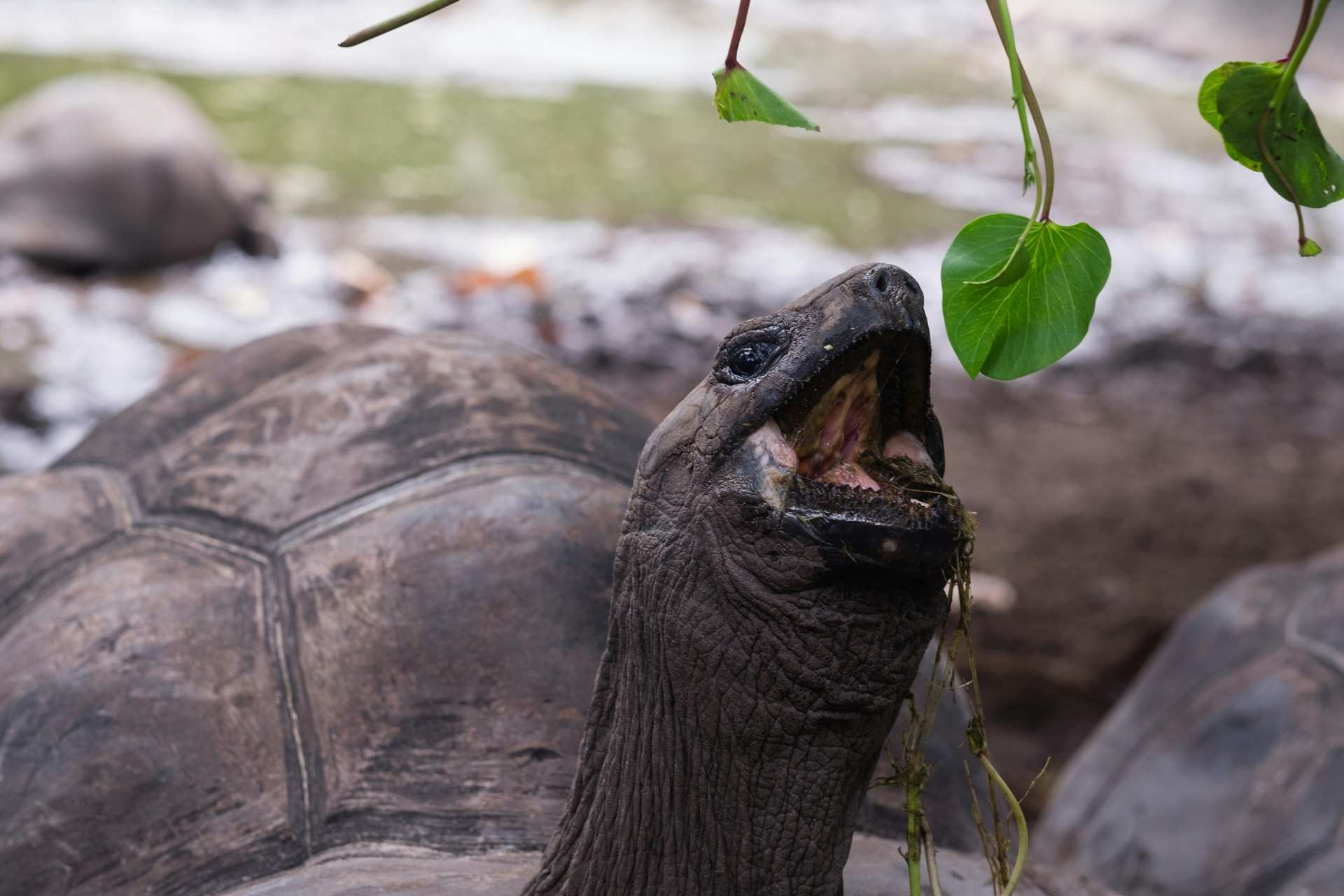
Hawksbill turtles come ashore to nest from about October to March, with a peak around December. Unusually, they nest by day, and Cousin Island, a nature reserve off Praslin, is one of the places they are watched. Green turtles nest mostly on the outer islands, through much of the year. The giant tortoises on Curieuse and La Digue are there in every month.
Mahé, Praslin and La Digue by season
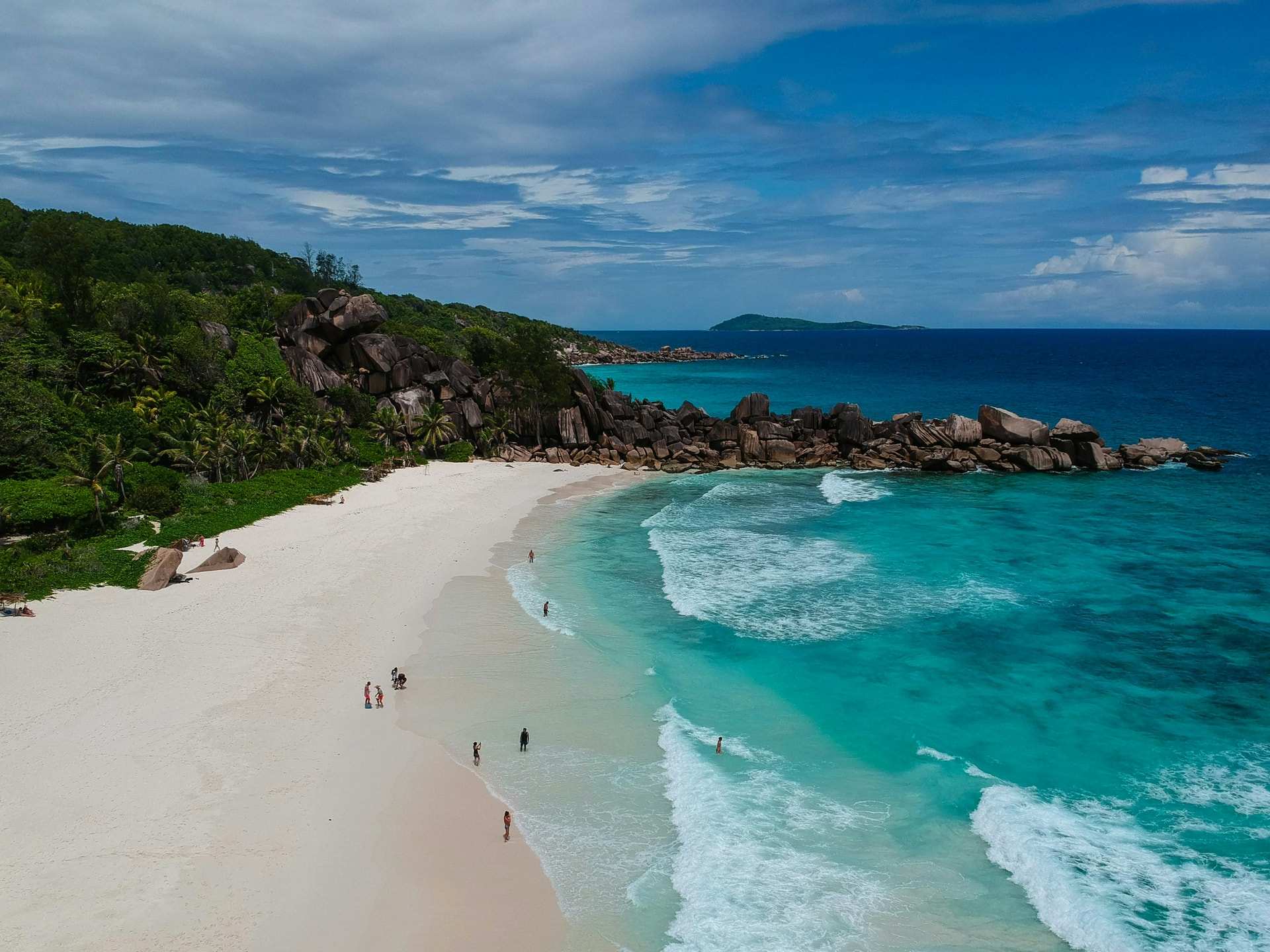
The three main islands share a climate, and each has a calm side for each wind. On Mahé, that is the north-west in the trade-wind months and the east and south in the monsoon. On Praslin, the Côte d’Or in the north-east is the better beach from May to September, and the south coast from October to April. La Digue is small enough to cross by bicycle in an hour, so a rough beach there is never far from a calm one. See La Digue by bicycle.
We usually split a week between two islands, and we book the hotel on each for its side of the island as much as for the room.
What each month costs
Prices follow the holidays more than the weather. The Christmas and New Year weeks are the most expensive of the year, followed by Easter and the European summer in July and August. The calm months of April, May, October and November usually sit on mid-season rates outside Easter, which makes them the best value as well as the best weather. February and March, after the New Year rush and before Easter, are often the cheapest.
Festival Kreol
Festival Kreol, the national celebration of Creole music, food and dance, takes over the last week of October, with events on Mahé through the month. In 2026 the main week is 25 to 31 October. It falls in one of the calm months, which makes late October a good choice for anyone who wants the islands at their liveliest.
Seychelles after a Kenya safari
Kenya Airways flies nonstop from Nairobi to Mahé in a little over three hours on several days a week, so Seychelles sits easily at the end of a safari. We ticket the flights with the hotels so the connections line up.
The best overlap is late September into October. The Maasai Mara is still dry and the herds are usually still there, and Seychelles is moving into its calmest month. January and February work for the safari half, since Kenya is dry then, but Seychelles is in its wet season. See the best time to visit Kenya for the safari side.
When we would go
If we could pick one month, it would be October: calm water, the most dry days of the year, whale sharks off Mahé, and a Kenya safari still in season on the way there. April is the other one, especially for divers.
Our Seychelles page has the hotels we book on each island. If you are choosing between the islands of the Indian Ocean, Mauritius and the Maldives run on different calendars, and the when-to-go table sets all of them side by side.
Sources
- meteo.sc/services/climate/seychelles-climate-guide
- expertafrica.com/seychelles/weather-and-climate
- seychelles.travel/en/explore/special-interest/266-diving
- audleytravel.com/the-seychelles/best-time-to-visit
- natureseychelles.org/news/latest-news/hawksbill-turtle-nesting-season-a-trailblazer-arrives-on-cousin-island
- koek.sc/en/seychelles-diving-guide/seychelles-whale-shark-diving
- insideseychelles.com/festival-kreol-2026-in-seychelles
- kenya-airways.com/en_ke/flights-from-nairobi-to-seychelles