On this page
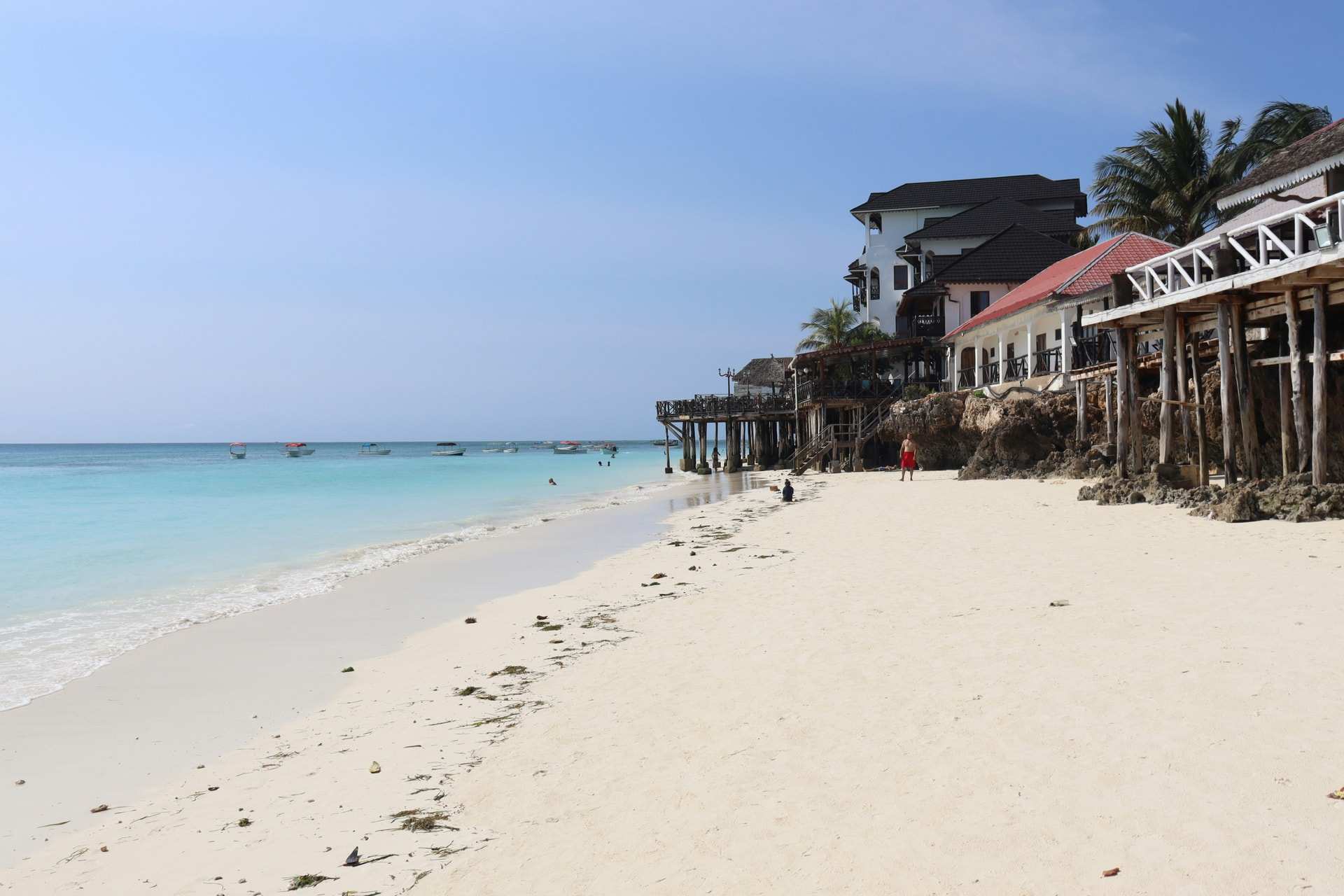
The best time to visit Zanzibar is June to October. It hardly rains, and the south-east trade wind keeps the heat down. The second window is January and February, the short dry spell between the two rains: hotter and more humid, with warm, clear water for snorkelling and diving.
The months we plan around are April and May. That is the heart of the long rains, and many of the east coast beach hotels close until June.
The rest of the year falls in between. March, November and most of December are showery but workable, and cheaper.
Zanzibar weather by month
| Month | Weather | Sea and wind | Price level | Our verdict |
|---|---|---|---|---|
| January | Hot and mostly dry, humid | Warm, clear water; the north-east kaskazi breeze | High, peak over New Year | Best |
| February | The hottest month, mostly dry | Warm and clear; kaskazi | High | Best |
| March | Long rains usually arrive during the month | Calmer, more cloud | Mid, falling | Shoulder |
| April | The wettest month, heavy downpours | Boat trips often called off | Lowest | Avoid |
| May | Long rains, easing late in the month | The wind turns south-east | Lowest | Avoid |
| June | Dry season begins, less humid | The south-east kusi builds | Mid to high | Best |
| July | Dry, the coolest month | Kusi at its strongest | Peak | Best |
| August | Dry and sunny | Kusi; humpback whales off the north | Peak | Best |
| September | Dry, warming | Wind easing, good diving | High | Best |
| October | Dry, hot by the end of the month | Calm, clear water | High | Best |
| November | Short rains, sunny mornings | Light winds; whale sharks start | Mid | Shoulder |
| December | Showers fade, more sun by Christmas | The kaskazi returns | Mid, peak at Christmas | Shoulder |
The rains do not start on a date. The long rains can arrive in early March or hold off until April, and the short rains can be a week of storms or most of a month. Read each row as the usual year.
The dry season: June to October
This is the island at its most reliable. It rarely rains, the humidity drops, and daytime temperatures sit around 30°C with nights near 20°C in July and August. The trade wind blows steadily from the south-east, which keeps the beaches comfortable and the east coast lively.
It is also the busiest part of the year, because it matches the safari high season on the mainland. Most people come to Zanzibar straight from the Serengeti or the Mara, so the good rooms on the north coast and at the private islands fill early for July and August. September and October are just as dry, and a little quieter once the European summer holidays end.
January and February: hot, dry and clear
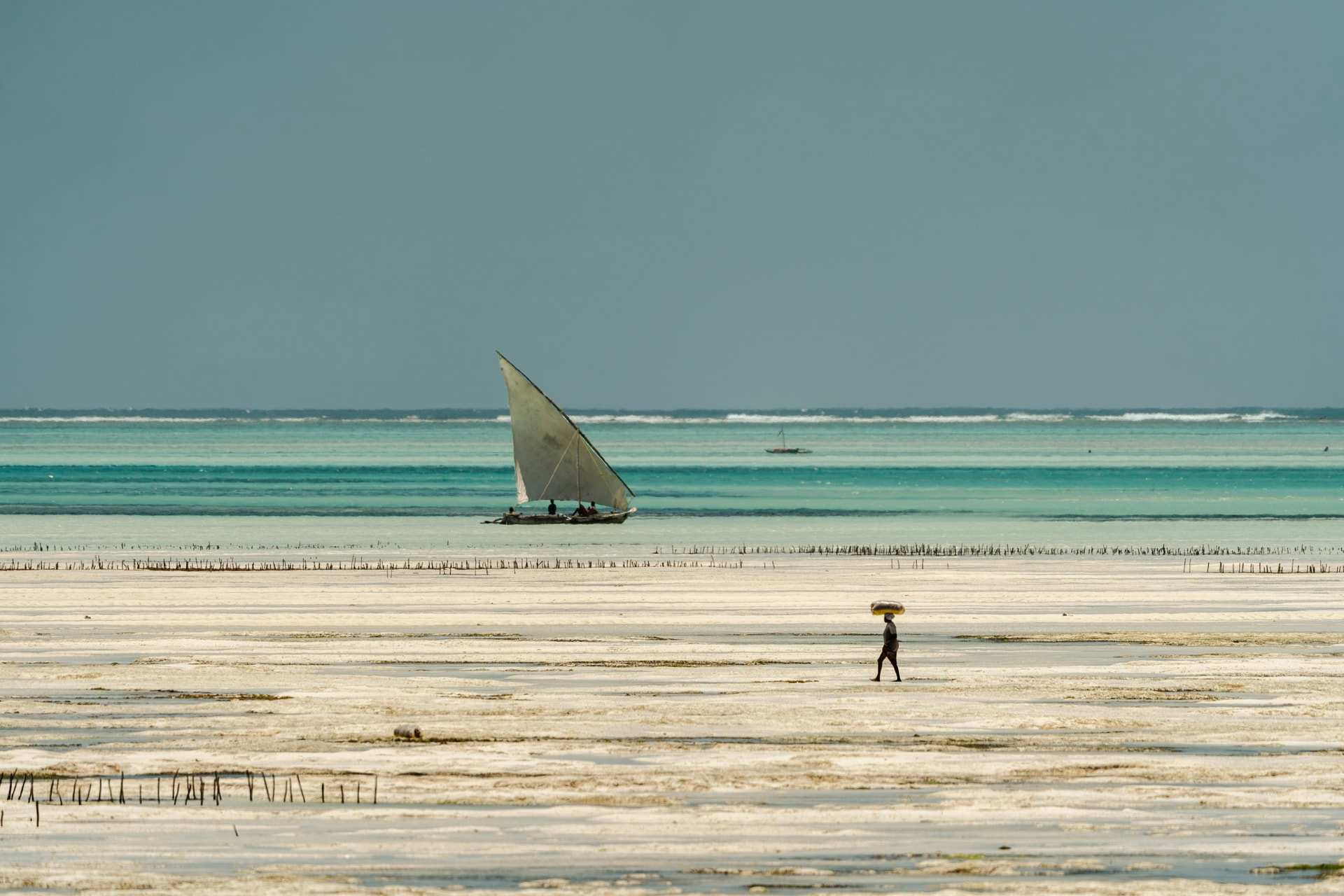
After the short rains, the island dries out again from about late December. January and February are the hottest months, with highs in the low 30s and heavy, humid afternoons. The north-east wind, the kaskazi, is lighter than the kusi, and the water is warm and often very clear, which is why divers rate these months so highly.
Christmas and New Year are peak-priced and book up well ahead. From mid-January rates ease, and February is one of the best-value dry months of the year.
When is the rainy season in Zanzibar?
There are two rainy seasons. The long rains run from about March to May, and April is the wettest month. Rain usually comes as heavy afternoon downpours rather than all day, but it falls often enough that many east coast hotels close for the season and dive centres cut back. Stone Town carries on, and the hotels that stay open charge their lowest rates. For a first beach week after a safari, we would not book April or May.
The short rains fall in November and sometimes into early December. They are lighter and less predictable. Mornings are often sunny, the showers pass quickly, and the island turns green again. November can be a good month for anyone who wants the island quieter and cheaper and can live with an afternoon under cover.
Which coast, in which wind?
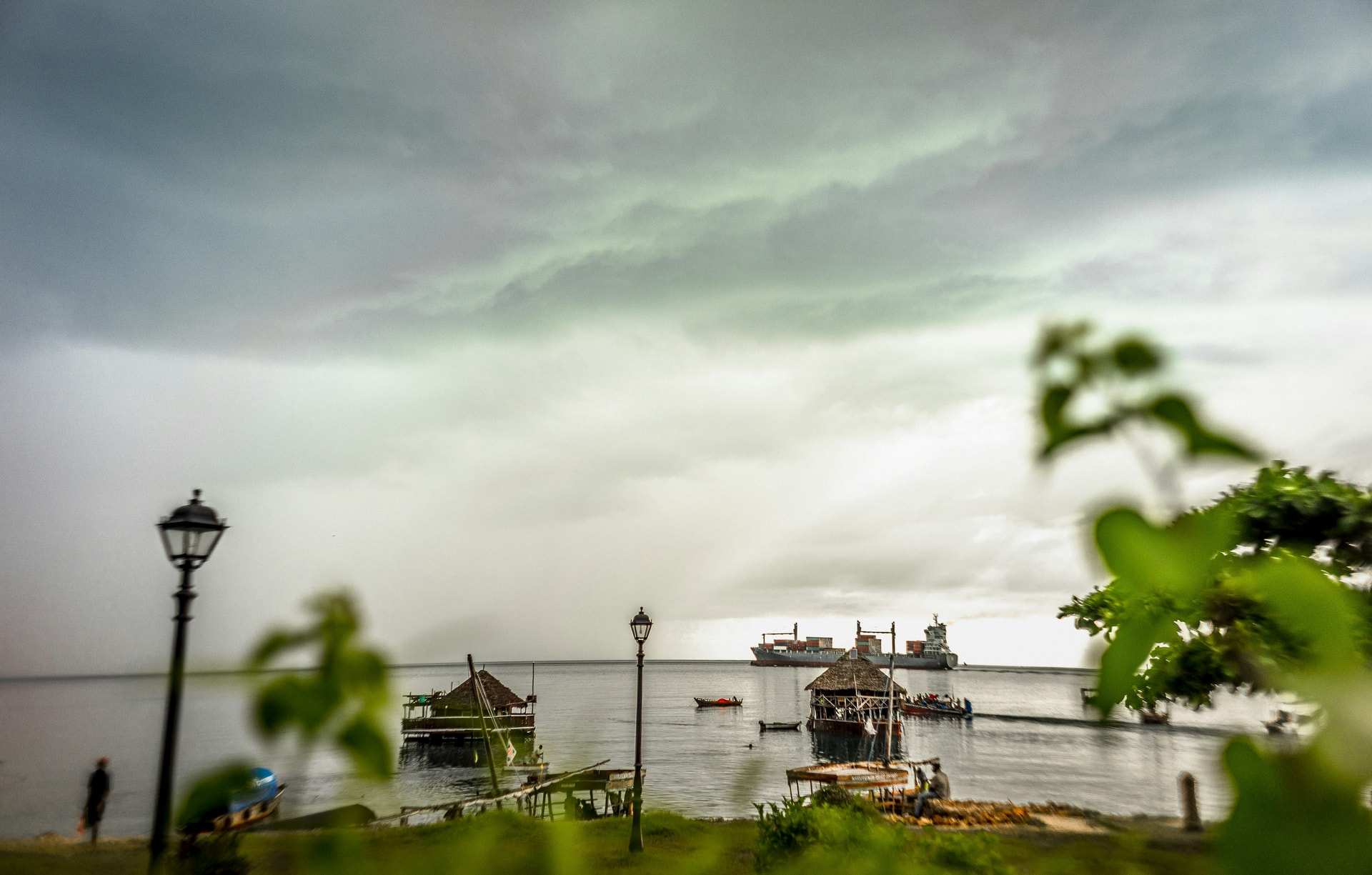
Zanzibar’s two trade winds decide which beach feels best.
The east coast (Paje, Jambiani, Bwejuu, Matemwe) faces the open ocean behind a reef. The tide there goes out a long way, leaving a lagoon of sand and seaweed farms at low water, so swimming depends on the time of day. Paje is the island’s kitesurfing centre. The kusi, from about June to October, is the stronger wind, better for experienced riders. The kaskazi, from about December to March, is lighter and steadier, which suits beginners.
The north coast (Nungwi and Kendwa) has a much smaller tidal range, so you can swim at almost any hour. It is the more sheltered choice in the windiest weeks of July and August. Our Zanzibar page lists the hotels we book on each coast and the three private islands.
Diving, whale sharks and whales
The reef at Mnemba Atoll, off the north-east, is the island’s best-known dive and snorkel site. Visibility is usually at its best from October to March, when the wind is lighter and the sea calmer.
Two animals have seasons of their own. Whale sharks are seen most often from about November to February, mainly off the south coast, though never on a schedule. Humpback whales pass the north of the island during the dry season, most often in August and September. Neither can be promised on a given day, and boats go out when the sea allows.
Ramadan, festivals and Stone Town
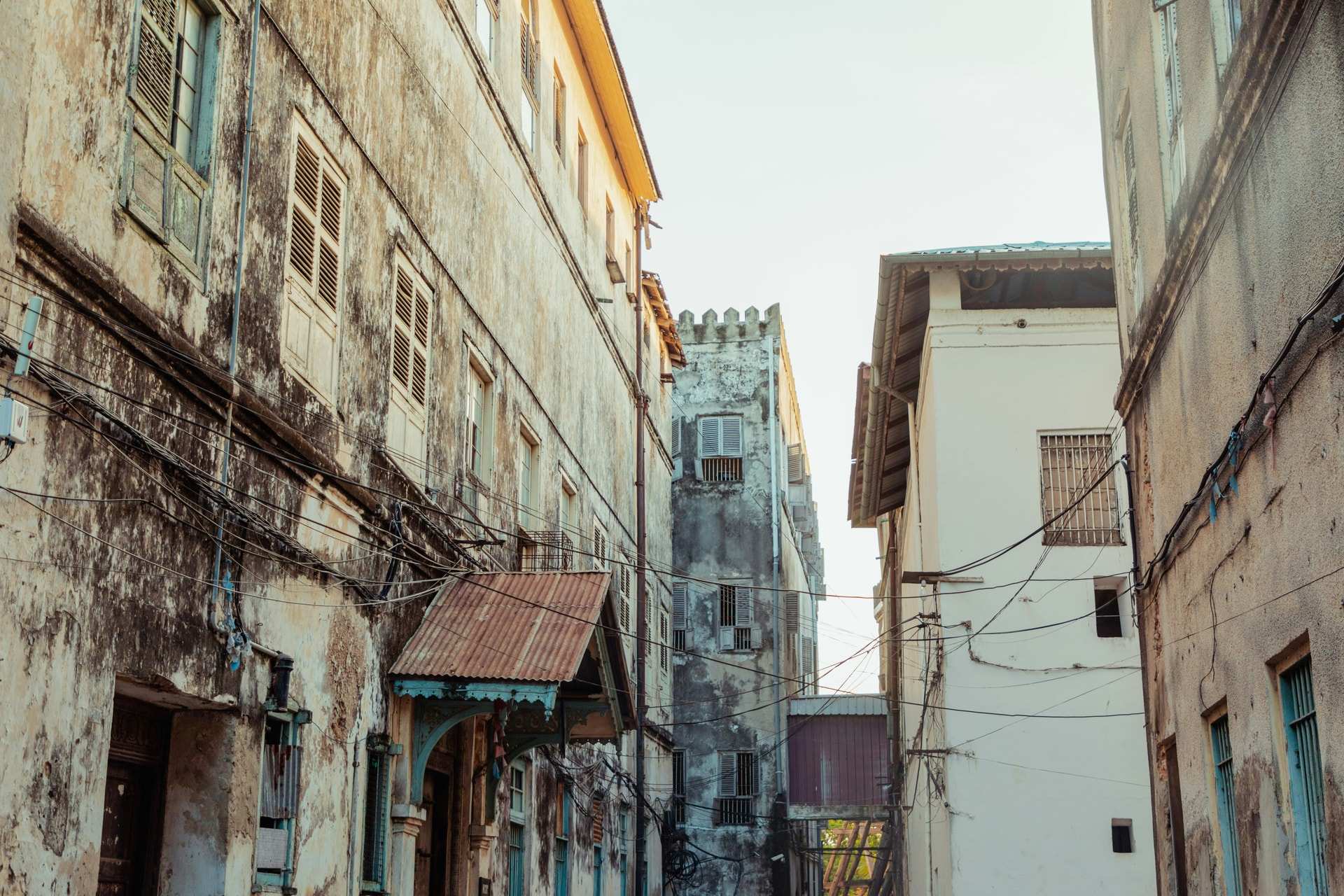
Zanzibar is a mostly Muslim island, and Ramadan changes the rhythm of Stone Town and the villages. Many cafés and small restaurants close in daylight, the streets are quiet by day and busy after dark, and visitors are asked not to eat, drink or smoke in public. The beach resorts carry on as normal. Ramadan moves about eleven days earlier each year; in 2027 it is expected to run from about 8 February to 8 March, so it overlaps the short dry season.
Two festivals are worth planning around. Sauti za Busara, the Stone Town music festival, is usually held in February; the 2027 edition is set for 19 to 21 March. The Zanzibar International Film Festival runs in late June or early July. Hotels in Stone Town fill for both.
Whatever the month, cover shoulders and knees in Stone Town and the villages, and keep swimwear for the beach and the hotel.
Zanzibar after a safari
Zanzibar keeps almost the same seasons as the mainland parks, so a safari in a good month usually ends on a good beach. August or September in the Mara or the northern Serengeti, then a week on the island, is the classic pairing. January and February work too: the calving on the southern Serengeti plains, then the hottest, clearest weeks at the coast. The best time to visit Tanzania and the wildebeest migration guide cover the safari half, and Kenya or Tanzania helps with the choice of country.
From Nairobi, both Kenya Airways and Safarilink fly to Zanzibar, and we ticket the flights with the hotels so the legs connect. If you live in Kenya, our Zanzibar resident rates show what the same rooms cost across the year, which is the quickest way to see how much the month changes the bill.
When we would go
For a first visit, go in September: dry, sunny, a little less humid than February, with the whales still passing the north and the high-season crowds thinning. If you are coming from a safari in the Mara in August, stay on for a week and you get the river crossings and the island’s best weather in one trip.
For value, go in early June or November, when the island is green, rates are lower and the weather is usually fine. Avoid April and May unless the lowest price is the whole point.
The when-to-go table sets Zanzibar against every other destination we book, month by month.
Sources
- expertafrica.com/zanzibar/weather-and-climate
- go2africa.com/destinations/zanzibar/when-to-go
- climateknowledgeportal.worldbank.org/country/tanzania/climate-data-historical
- kitecentrezanzibar.com/blog/zanzibar-wind-conditions
- pongwe.com/best-time-for-wildlife-in-zanzibar
- busaramusic.org
- ziff.or.tz
- islamicfinder.org/special-islamic-days/ramadan-2027