On this page
- What age is right for a first safari?
- Minimum ages: game drives, walks, balloons and gorillas
- Private vehicle or shared?
- Kenya, Tanzania or South Africa with children
- Family rooms, tents and camps that want children
- Health: malaria, vaccinations and the long flight
- Pairing the bush with the beach
- School holidays and when to book
Children make good safari guests. They spot things adults miss and ask the guide questions no adult would think of. The trip needs planning around them: activities that suit their ages, a vehicle you control, and a camp that wants children there.
What age is right for a first safari?
Between about six and twelve is the easiest range. Children that age can sit through a morning game drive, understand what they are looking at, and are old enough for most activities. Teenagers get the most out of it, because walking safaris and gorilla trekking open up to them.
Under six works too, with adjustments. Game drives are long, the vehicle has to be quiet near animals, and a tired three-year-old is not quiet. With a private vehicle and a camp that takes small children, a safari with toddlers is very manageable. Plan shorter drives, more time at camp, and one park rather than three.
Minimum ages: game drives, walks, balloons and gorillas
Every camp and operator sets its own rules, and they vary a lot. These are the usual ones:
| Activity | Typical minimum age | Who sets it |
|---|---|---|
| Shared game drive | Around 6 at many camps; some take younger children in a private vehicle only | The camp |
| Private game drive | Usually no minimum | The camp |
| Walking safari | 12 at most camps, 16 at some | The camp or conservancy |
| Balloon flight | Set by each operator, by age or height | The balloon operator |
| Horse riding | Set by each riding stable, with a riding standard | The camp |
| Gorilla trekking | 15, in Rwanda and Uganda | RDB and UWA |
| Chimpanzee tracking | Set by the wildlife authority, usually lower than for gorillas | UWA or RDB |
Some camps are adults-only, and some set a minimum age of 12 or older for the whole property. We check the camp’s current policy for your children’s ages before we suggest it. For gorilla trekking, the limit of 15 is enforced at the briefing, and there is no way round it. Families with younger children often split the day, with one parent trekking and the other on a shorter activity.
Private vehicle or shared?
With children, book a private vehicle. It is the single biggest difference to how a family safari goes.
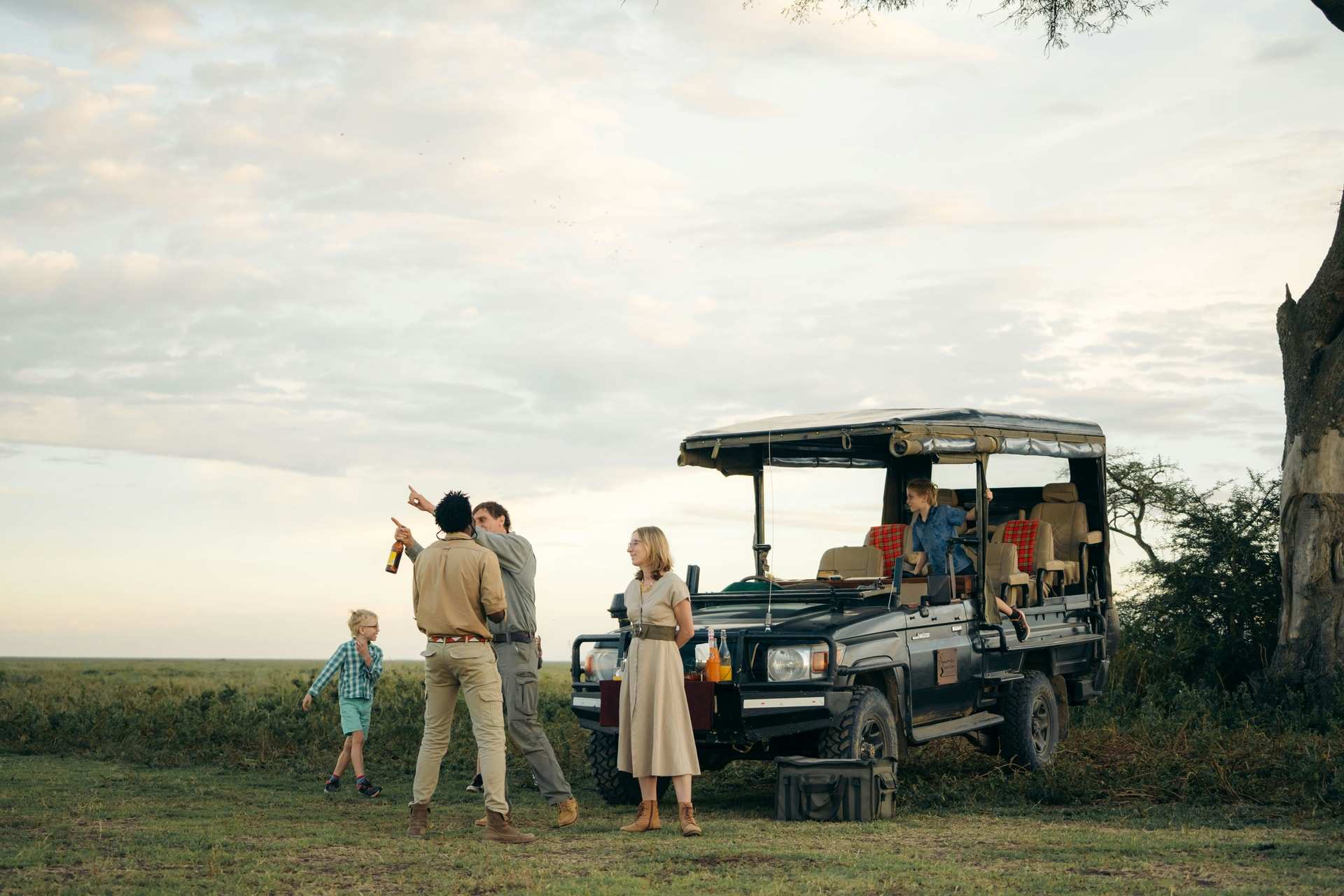
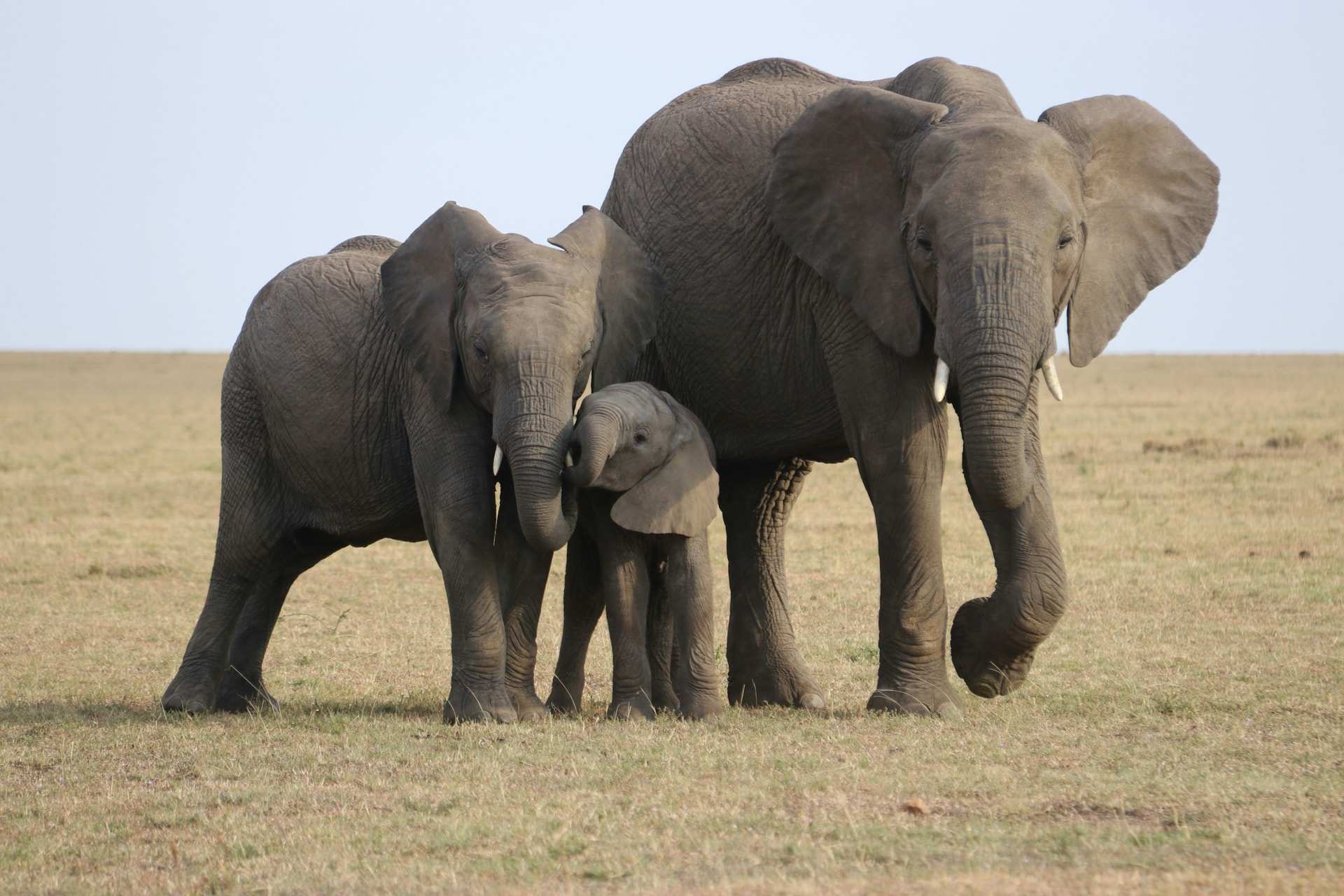
In a shared vehicle, you are on other guests’ schedule: you stay at a sighting until everyone is done, you go out and come back at set times, and a child who needs a break has to wait. In a private vehicle, the drive runs at your children’s pace. You can go back to camp after an hour, stop for a snack, or sit with a family of elephants for as long as the children want.
Many camps require a private vehicle for families with children under six or so. For a family of four or more, the extra cost per person is often small, because the vehicle is shared across the family. The safari vehicles guide explains what the vehicles are like inside.
Kenya, Tanzania or South Africa with children
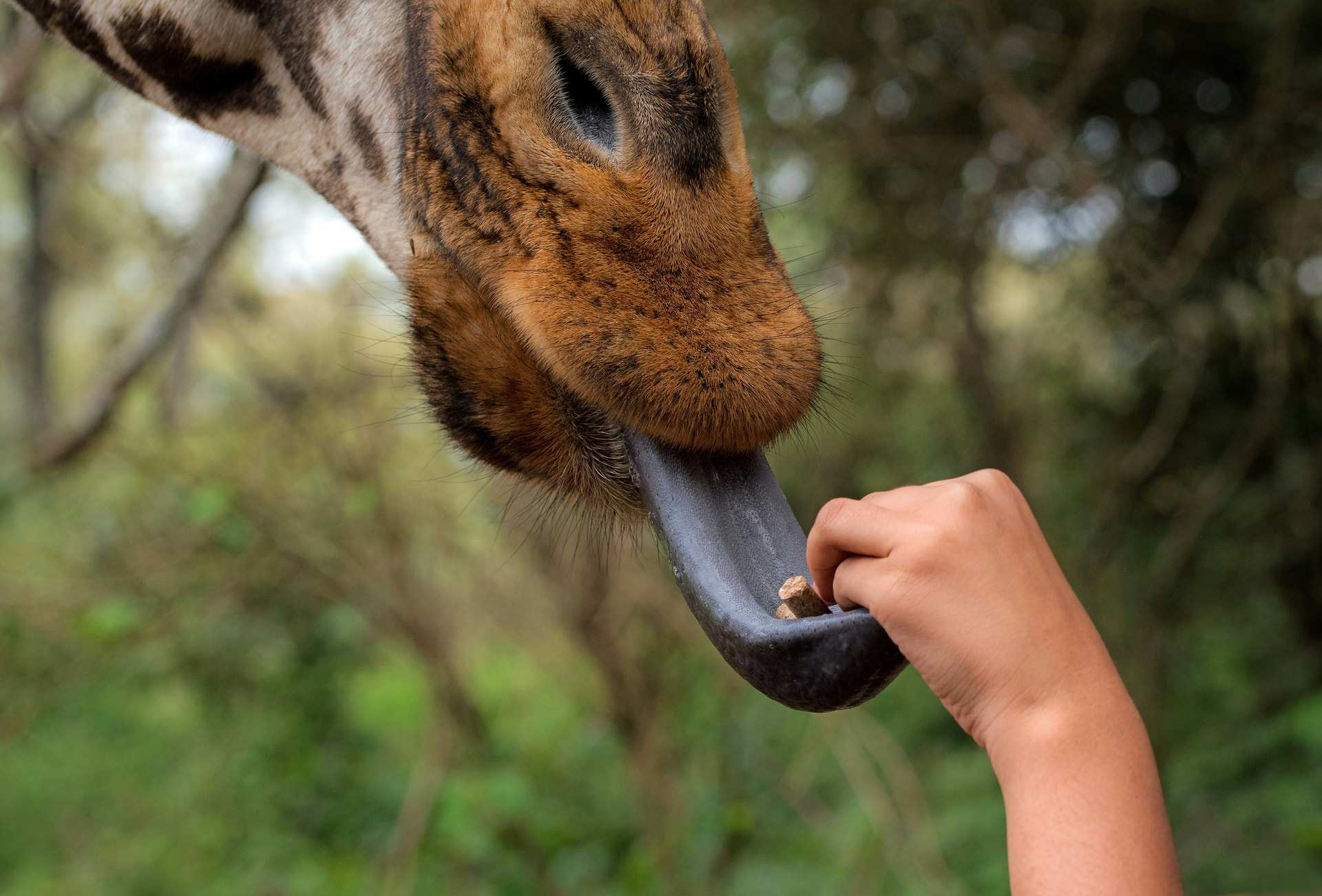
Kenya is where we send most families. The flights between parks are short, many Mara and Laikipia camps have family tents and children’s programmes, and the coast is a short flight from the Mara. The conservancies allow walking and night drives, which older children love. Nairobi has the Giraffe Centre and the elephant orphanage for a first or last day.
Tanzania suits families with older children who can manage longer drives or several bush flights. The Ngorongoro Crater is a good family day: the floor is compact and the game is close. Distances in the Serengeti are the thing to plan around. Our Kenya or Tanzania guide sets out the differences.
South Africa has something East Africa’s big parks do not: game reserves outside the malaria zone. Pilanesberg, near Johannesburg, and Madikwe, on the Botswana border, are both outside the malaria zone, which makes them the first choice for families with babies and toddlers. See Pilanesberg game drives and South Africa.
Family rooms, tents and camps that want children
A camp that tolerates children and a camp that wants them are different places. The second kind has family tents with two bedrooms under one roof, children’s menus and early suppers, babysitting in the evening, and guides who know how to keep a seven-year-old interested for three hours.
Several of our Kenyan trips are built around camps like that:
- Angama Family Safari: four nights at Angama Mara, a private vehicle throughout, and childminding every evening so dinner is yours.
- Family Safari Escape: Hemingways Ol Seki in the Naboisho Conservancy, with junior-ranger bushcraft and a morning in a Maasai village.
- Family Bush and Beach Adventure: five nights in the Mara, then a villa above Diani with a nanny.
- Multi-Generational Celebration: the Mara North Conservancy, then Watamu, for families with grandparents along.
Ask about connecting rooms at lodges, because tents often cannot connect. And ask whether the tents are fenced or open: in an unfenced camp, children are walked to and from their tent after dark by staff, every time.
Health: malaria, vaccinations and the long flight
The Masai Mara, the Serengeti and the Kenyan and Tanzanian coasts are all malaria areas. Anti-malarial medicines come in children’s doses, and the rest of the protection is the same as for adults: long sleeves and trousers at dusk, repellent suitable for your children’s ages, and nets or screened tents at night. Book a travel clinic appointment well before you fly, because some courses start before you arrive.
Yellow fever is the other check. Kenya and Tanzania can ask travellers over one year old for a certificate if they arrive from a country with yellow fever risk, and Kenya itself is on the list for Tanzania. If your trip crosses from Kenya into Tanzania, ask the clinic about it.
The time difference is kind to families from Europe, with Kenya only one to three hours ahead of most of it. From North America or Asia, give the children a quiet first day in Nairobi or at the coast before the early game drives start.
For the paperwork, children need their own entry documents. Our Kenya eTA guide covers Kenya. If one parent is travelling alone with a child, carry a signed consent letter from the other, because airlines and borders can ask for one.
Pairing the bush with the beach
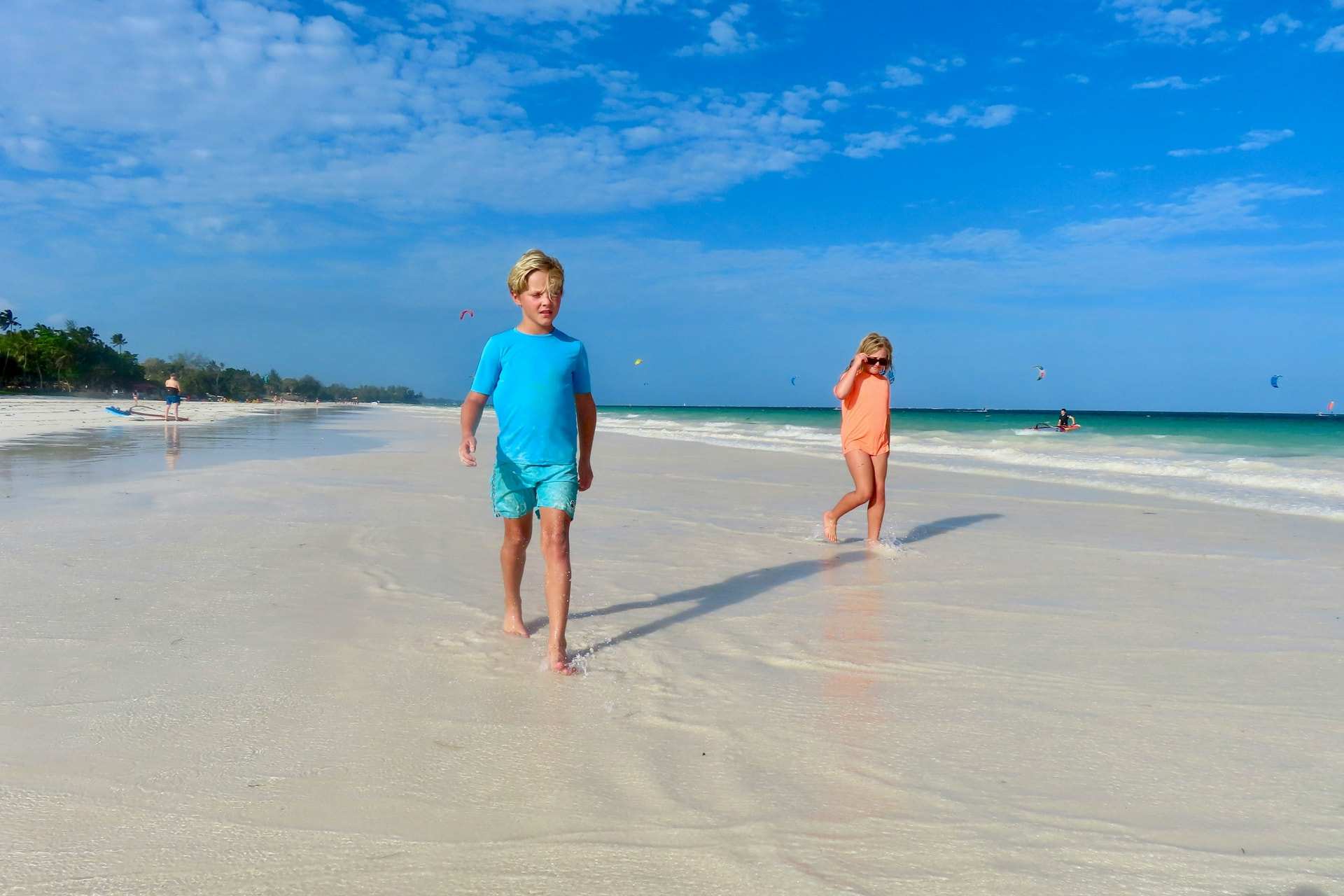
The combination of three or four nights on safari followed by a week on the beach works well for children. The safari is early starts and long drives, and the beach is where everyone recovers.
In Kenya, Diani and Watamu both work. Watamu has a marine park with rock pools and turtles, and Diani has the long beach and the larger family resorts. The Family Beach Itinerary spends six days at Watamu with a kids’ club and a day with nothing booked in it. Zanzibar is the Tanzanian equivalent. Our Kenyan coast packing list covers reef shoes and the other things children need there.
School holidays and when to book
Most families travel in school holidays, so the question is which one. July and August bring the migration to the Mara, and the best family camps are booked the year before. The Christmas holidays are warm and green, and just as busy. The shorter half-term breaks, and the Easter holidays when they fall before the long rains, are quieter and better value.
Our school holiday calendar lays out the Kenyan, British and American breaks side by side. Kenyan resident families can see the camps’ shilling rates on our resident rate tables.
Tell us your children’s ages and your dates. We will suggest camps that take children of those ages, and check the family tents before anything else.
Sources
- go2africa.com/african-travel-blog/best-age-for-a-family-safari-when-to-go-with-kids
- safaribookings.com/blog/10-considerations-for-families-going-on-safari
- visitrwandabookings.rdb.rw/rdbportal/mountain-gorilla-tracking
- masaimara.ke/entry-fees
- wwwnc.cdc.gov/travel/destinations/traveler/none/kenya
- wwwnc.cdc.gov/travel/destinations/traveler/none/tanzania